EU Targets Chinese and Iranian Hackers in Major Cyber Crackdown
By Tutorial Nest Editorial Team
Published: March 21, 2026
EU Targets Chinese and Iranian Hackers in Major Cyber Crackdown
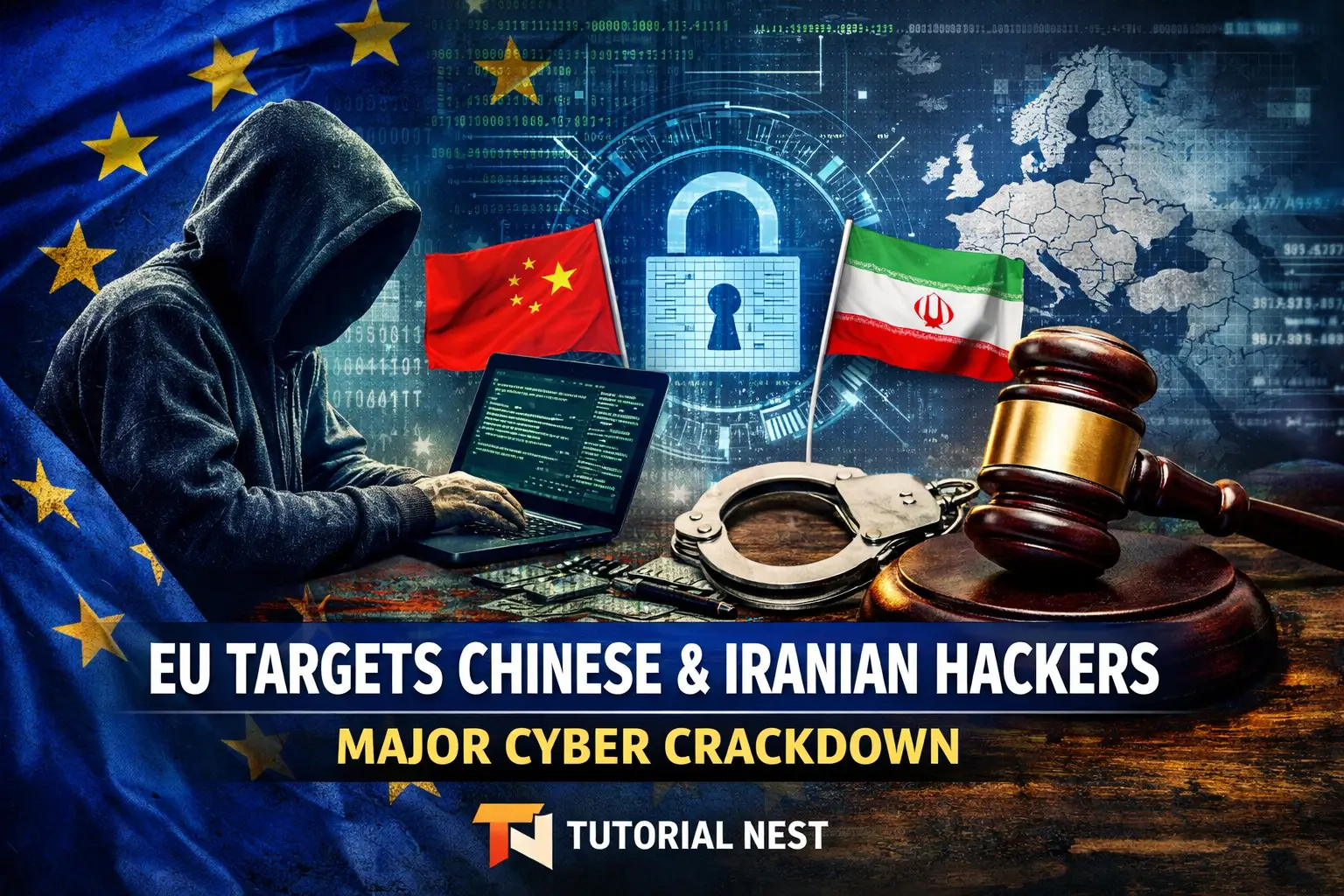
The European Union is intensifying its efforts to combat cybercrime, targeting Chinese and Iranian hackers in a major cyber crackdown aimed at strengthening digital security across member states. The move reflects growing concern among European policymakers about the increasing scale, sophistication, and geopolitical implications of cyberattacks.
As cyber threats continue to evolve, the EU’s latest actions signal a broader shift toward coordinated international cybersecurity enforcement. By focusing on alleged hacking groups linked to foreign actors, the European Union is attempting to deter cyber espionage, protect critical infrastructure, and reinforce trust in digital systems.
Rising Cyber Threats in a Digital World
Cybersecurity has become one of the most pressing challenges of the modern era. Governments, corporations, and individuals are increasingly dependent on digital systems, making them vulnerable to cyberattacks.
In recent years, cyber threats have grown in both frequency and complexity. Attackers are no longer limited to basic phishing scams; instead, they employ advanced techniques such as:
- Ransomware attacks
- State-sponsored espionage
- Supply chain compromises
- AI-assisted cyber intrusions
Consequently, the EU has recognized the need for stronger measures to defend its digital infrastructure.
Why the EU Is Taking Action
The European Union’s decision to target specific hacker groups is driven by several factors. First and foremost, cyberattacks have the potential to disrupt critical sectors, including:
- Energy systems
- Financial institutions
- Healthcare networks
- Government operations
Moreover, cyber incidents can have far-reaching economic and political consequences. Therefore, policymakers are increasingly treating cybersecurity as a matter of national and regional security.
In addition, international tensions have contributed to the urgency of addressing cyber threats. As digital conflicts become more intertwined with geopolitical dynamics, governments are adopting stricter measures to protect their interests.
The Role of State-Sponsored Cyber Activity
One of the key concerns behind the EU’s crackdown is the rise of alleged state-sponsored cyber activity. While attribution in cyberspace is often complex, security agencies have identified patterns suggesting involvement from organized groups operating with varying degrees of state support.
These groups are typically associated with:
- Intelligence gathering
- Intellectual property theft
- Strategic disruption of rival economies
As a result, the EU’s actions aim to send a clear message that such activities will face consequences.
Strengthening Cybersecurity Frameworks
In response to growing threats, the EU has been actively enhancing its cybersecurity framework. This includes in EU Targets Chinese and Iranian Hackers in Major Cyber Crackdown :
- Updating cybersecurity regulations
- Increasing funding for digital defense initiatives
- Promoting cooperation among member states
- Partnering with private sector organizations
Furthermore, the EU has been working to improve information sharing between countries, enabling faster responses to cyber incidents.
International Cooperation and Cyber Defense
Cybersecurity is inherently a global issue. Therefore, the EU’s efforts are closely linked with international cooperation. By collaborating with allies, the European Union aims to:
- Track cybercriminal networks
- Share intelligence on threats
- Develop joint defense strategies
This cooperative approach is essential because cyber threats often cross national boundaries, making unilateral action less effective.
Economic Impact of Cybercrime
Cybercrime is not just a security issue—it is also an economic challenge. According to industry estimates, global cybercrime costs are projected to reach trillions of dollars annually.
For businesses, cyberattacks can result in:
- Financial losses
- Reputational damage
- Operational disruptions
- Legal liabilities
Consequently, stronger enforcement measures, such as the EU’s crackdown, are seen as necessary to protect economic stability.
Technology and the Evolution of Cyber Threats
As technology advances, so do cyber threats. Emerging technologies such as artificial intelligence and quantum computing are expected to play a dual role:
- Enhancing cybersecurity defenses
- Increasing the capabilities of cyber attackers
Therefore, governments must continuously adapt their strategies to stay ahead of evolving threats.
Challenges in Cyber Enforcement
Despite its efforts, the EU faces several challenges in enforcing cybersecurity measures. These include:
- Difficulty in attributing attacks
- Legal complexities across jurisdictions
- Rapid evolution of hacking techniques
- Limited international consensus on cyber norms
Nevertheless, the EU remains committed to addressing these challenges through policy innovation and collaboration.
The Importance of Digital Resilience
In addition to enforcement, the EU is focusing on building digital resilience. This involves:
- Strengthening infrastructure
- Educating users about cybersecurity risks
- Encouraging best practices in data protection
By improving resilience, the EU aims to reduce the impact of cyberattacks even when they occur.
Implications for Businesses and Individuals
The EU’s crackdown has important implications for both businesses and individuals. Organizations may need to:
- Enhance cybersecurity protocols
- Invest in advanced security tools
- Train employees in cyber awareness
Meanwhile, individuals are encouraged to adopt safer online practices, such as:
- Using strong passwords
- Enabling two-factor authentication
- Avoiding suspicious links and emails
A Broader Shift Toward Cyber Accountability
The EU’s actions reflect a broader global trend toward increased cyber accountability. Governments around the world are taking stronger positions against cybercrime, signaling a shift from passive defense to active enforcement.
This shift is likely to shape the future of international relations, as cyber activities become a central component of geopolitical strategy.
The Future of Cybersecurity in Europe
Looking ahead, cybersecurity will remain a top priority for the European Union. Future initiatives are expected to focus on:
- Advanced threat detection systems
- AI-driven cybersecurity solutions
- Strengthening public-private partnerships
- Developing global cyber governance frameworks
As digital transformation continues, the importance of cybersecurity will only grow.
Additionally, to better understand how to protect sensitive financial information online, explore our complete guide on foolproof strategies to keep your bank data secure, where we share practical tips to prevent fraud, phishing attacks, and unauthorized access.
Executive Summary
The EU’s decision to target Chinese and Iranian hackers in a major cyber crackdown underscores the urgency of addressing cyber threats in an increasingly digital world. By taking decisive action, the European Union aims to protect its infrastructure, economy, and citizens from evolving cyber risks.
While challenges remain, the EU’s proactive approach represents a significant step toward a more secure digital future. As cyber threats continue to evolve, coordinated efforts at both regional and global levels will be essential to maintaining stability and trust in the digital age.