
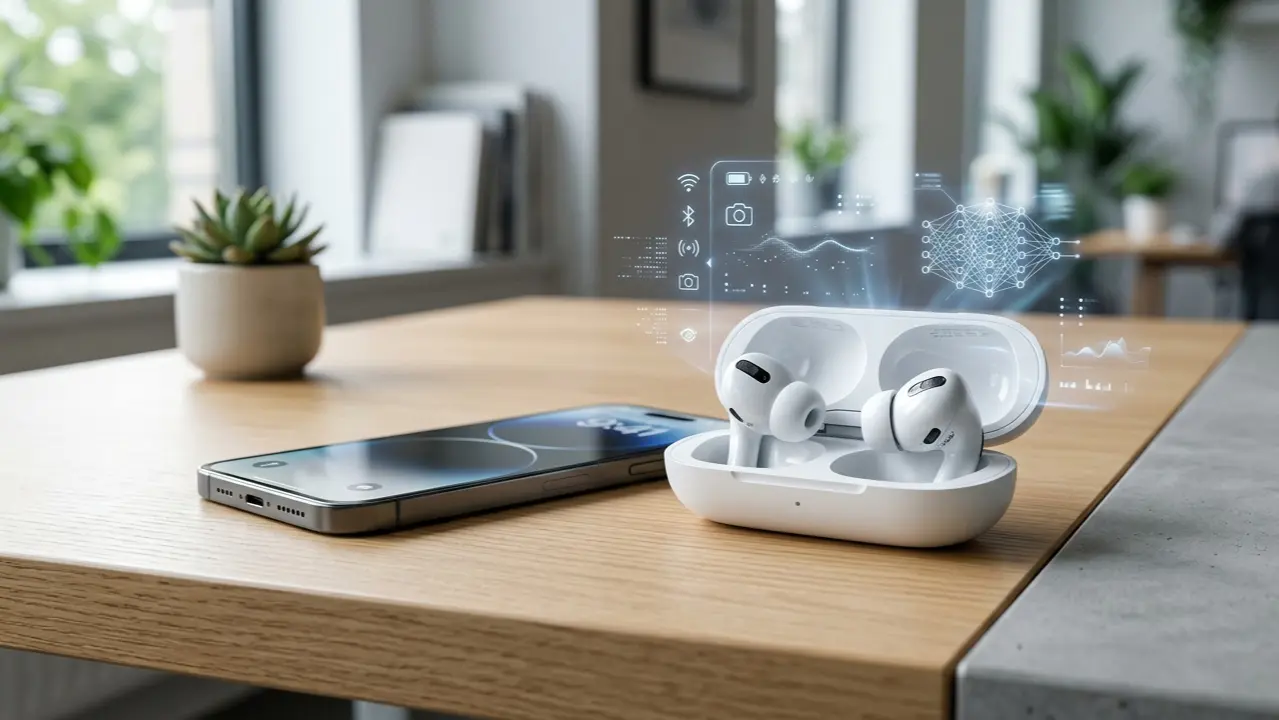

Apple Camera AirPods could mark one of the biggest changes in the history of Apple’s wireless earbuds. For years, AirPods have mainly been about music, calls, noise cancellation, and convenience. Now, reports suggest Apple is testing a version with built-in cameras designed to support AI features and give Siri more awareness of the world around the user.
According to Bloomberg’s Mark Gurman, Apple’s camera-equipped AirPods have reached an advanced testing stage, with near-final design and features ahead of production. The Verge also reports that these cameras are not meant for normal photos or videos. Instead, they would collect visual information that users could ask Siri about, such as visible ingredients, objects, or surroundings.
That distinction matters. Apple does not appear to be trying to turn AirPods into tiny hidden cameras for casual recording. The bigger idea seems more ambitious: turn AirPods into a wearable AI device that can understand context without forcing users to pull out an iPhone.
If that works, AirPods could move from audio accessories into a new category. They could become personal AI sensors that listen, see, and help users interact with the physical world more naturally.
The opportunity is huge, but so is the risk. Cameras inside earbuds will raise serious privacy questions, even if Apple limits their purpose. The success of this product may depend less on the hardware and more on whether users trust Apple’s explanation.
Why Apple Wants Cameras Inside AirPods
Apple’s reported plan makes more sense when you stop thinking of the cameras as normal cameras.
The goal is not to help people take photos from their ears. Reports say the cameras would give Siri visual context. That means AirPods could help the assistant understand what the user is looking at, what is nearby, or what kind of situation the user is in. MacRumors reports that the cameras would feed visual information to Siri, while an LED would indicate when visual data is being sent.
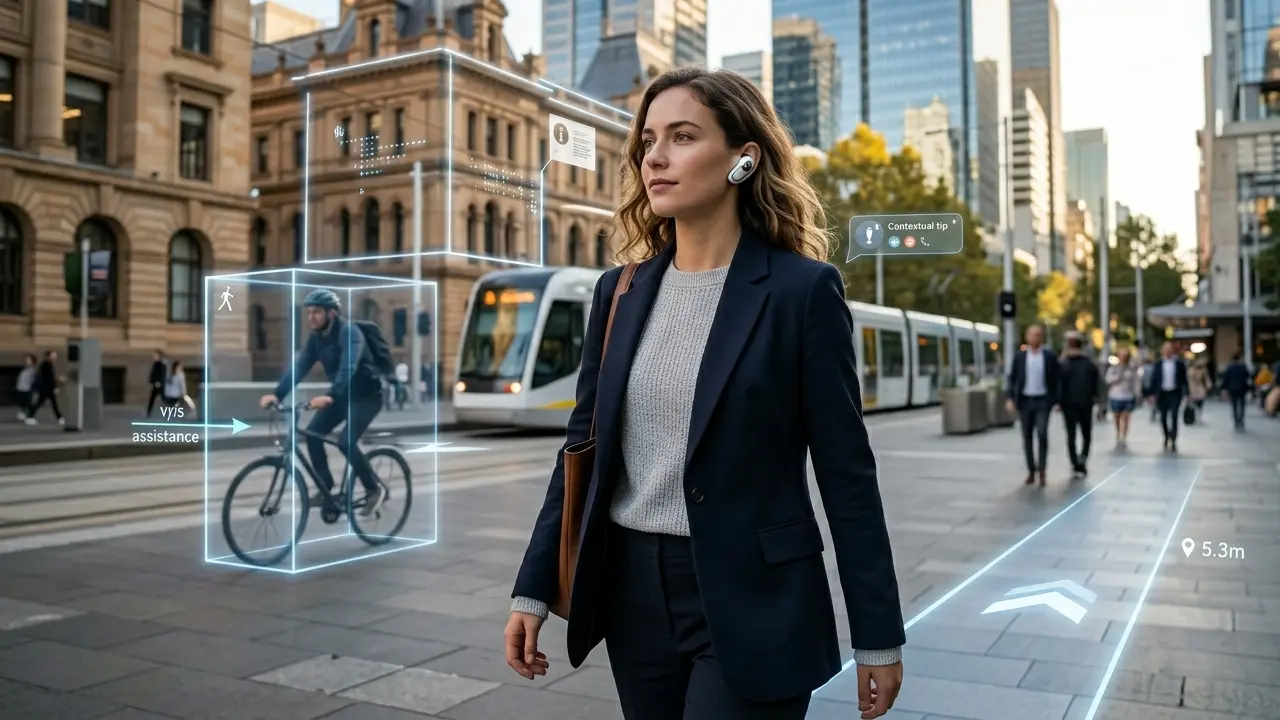
This could make Siri more useful in everyday life. A user might look at ingredients and ask what meal they can prepare. A traveler might ask about a sign or object nearby. A person walking through a city might ask for help understanding directions without holding a phone in front of their face.
That is powerful because voice assistants have always had one major weakness: they usually lack context. Siri can hear a command, but it does not always understand the environment behind the command. Camera-equipped AirPods could help solve that.
For Apple, this also fits a bigger strategy. The company wants AI to feel personal, private, and deeply connected to its hardware ecosystem. Instead of launching a strange new AI gadget from zero, Apple can build on a product millions of people already use.
That is why Apple Camera AirPods could matter so much.
How Apple Camera AirPods Could Change Siri
Siri has struggled for years because it often feels reactive instead of aware. Users ask a question, Siri answers, and the interaction ends. That model works for alarms, calls, timers, and basic commands, but it feels limited in the AI era.
Camera-equipped AirPods could change that by giving Siri visual awareness.
Imagine asking Siri, “What am I looking at?” while walking past a building, reading a label, or checking objects on a desk. Imagine asking for help with a product, a menu, a document, or a household item without needing to open the iPhone camera. This would make Siri feel more like a real assistant and less like a voice command tool.
The key is context. AI becomes more useful when it understands the situation around the user. Voice gives one layer of context. Location gives another. Visual input adds something much deeper.
However, Apple still needs to solve the software side. The Verge notes that the product timeline may depend on Apple’s improved Siri, which has faced delays.
That makes sense. Hardware alone will not make these AirPods special. If Siri remains slow, limited, or unreliable, the cameras will feel like an unnecessary experiment. But if Apple delivers a smarter Siri with strong visual intelligence, the product could feel genuinely new.
Why This Could Become Apple’s Next Major AI Device
The strongest thing about AirPods is not their size. It is their position in people’s daily lives.
AirPods are already worn during walks, work, travel, workouts, calls, commuting, and quiet moments at home. They are more socially accepted than mixed reality headsets and easier to wear than smart glasses for many users. That gives Apple a major advantage.
A dedicated AI device has to convince people to carry something new. Apple Camera AirPods would not need to do that. They would add intelligence to something many Apple users already understand.
That is why this product could become more important than it first appears.
Meta’s Ray-Ban smart glasses have shown that AI wearables can become more practical when they include cameras, voice, and real-world awareness. Apple’s approach may be different, but the direction is similar: move AI away from screens and into the user’s environment.
If AirPods gain visual intelligence, they could become a bridge between the iPhone and future Apple wearables. They would not replace the iPhone. They would make the iPhone ecosystem more ambient.
That matters because the future of AI may not belong only to phones, laptops, or chatbots. It may belong to devices that understand what users are doing in real time.
AirPods are small enough to disappear into daily life. That could make them one of Apple’s most important AI platforms.
The Privacy Problem Apple Cannot Ignore
This is where Apple needs to be extremely careful.
Cameras inside earbuds may create discomfort, even if Apple says they are not for taking normal photos or videos. People understand cameras in phones. They are still learning to accept cameras in glasses. Cameras in earbuds may feel even less obvious because people around the user may not expect them.
That creates a social trust issue.
If someone is wearing camera-equipped AirPods in a restaurant, meeting, shop, classroom, or public space, people nearby may wonder whether the device is analyzing the environment. Even with an LED indicator, not everyone will understand what the light means.
Apple’s privacy reputation gives it an advantage, but reputation alone will not solve the problem. The company will need clear controls, visible indicators, strong on-device processing where possible, and simple explanations that ordinary people can understand.
The question is not only whether Apple protects user data. The question is whether people around the user feel respected too.
That is a harder problem.
If Apple handles privacy badly, the product could face backlash before users understand its benefits. If Apple handles privacy well, it could set the standard for responsible wearable AI.
Apple Camera AirPods vs Meta Ray-Ban Smart Glasses
The comparison with Meta Ray-Ban smart glasses is unavoidable.
Both products point toward the same future: AI that can see, hear, and respond to the real world. But the social meaning of each device is different.
Smart glasses already signal visual technology. People can see the frame, the lenses, and the camera placement. AirPods, however, are strongly associated with audio. Adding cameras to earbuds changes the meaning of a familiar product.
That could help Apple and hurt Apple at the same time.
It could help because AirPods are already popular, comfortable, and widely accepted. Many people wear them without thinking. But it could hurt because people may not immediately realize that a pair of earbuds includes camera sensors.
This is why transparency will matter. Apple cannot simply rely on product design. It must explain the purpose clearly.
The advantage for Apple is ecosystem trust. AirPods, iPhone, Siri, Apple Intelligence, and Apple privacy controls can work together in ways that third-party devices may struggle to match.
But Meta has moved faster in AI wearables. Apple may have brand power, but it cannot assume that users will accept cameras anywhere simply because the product has an Apple logo.
Who Would Actually Use AI AirPods?
The first users may not be people who want another gadget. They may be people who need faster access to context.
Travelers could use AI AirPods to understand signs, menus, landmarks, or local information while moving through unfamiliar places. Students could use them to ask questions about physical materials, objects, or study environments. Professionals could use them during field work, inspections, presentations, or hands-free tasks.
Camera-equipped AirPods could also become meaningful for accessibility. People with low vision may benefit from a wearable assistant that can describe surroundings, identify objects, or provide quick guidance without requiring constant phone use.
That use case matters. The best AI devices will not only entertain users. They will reduce friction in real situations.
However, not everyone will need this product. Some users only want AirPods for audio. Others may feel uncomfortable wearing cameras, even if they trust Apple. The device will need a clear reason to exist beyond curiosity.
For Apple Camera AirPods to succeed, Apple must show everyday value quickly. The product cannot depend on vague promises about the future of AI. Users need simple moments where they think, “This actually helped me.”
Expert Insight on Apple Camera AirPods
Apple does not need Camera AirPods to replace the iPhone. It only needs them to make Siri useful in moments when pulling out a phone feels slow, awkward, or unnecessary.
That is the most important way to understand this product.
The iPhone will remain the center of Apple’s ecosystem for a long time. But AI changes how users interact with devices. Instead of opening apps, typing searches, or pointing a phone camera, users may expect assistants to understand context automatically.
Camera-equipped AirPods could support that shift.
Still, Apple has a difficult challenge. The product must feel helpful without feeling invasive. It must feel intelligent without making people feel watched. It must add context without creating confusion about recording, analysis, or cloud processing.
That balance will decide whether this becomes a breakthrough or a controversy.
The hardware may be close, but the user experience will determine everything.
Apple has already shown growing interest in advanced camera hardware, especially as reports continue suggesting the company is exploring future iPhone upgrades with more powerful telephoto systems and higher-resolution imaging sensors.
What Apple Camera AirPods Mean for the Future of AI Wearables
If this product launches successfully, it could change how people think about wearables.
For years, wearables focused mostly on health, fitness, notifications, and audio. AI wearables add a new layer: awareness. They try to understand what the user sees, hears, says, and needs in the moment.
That is a major shift.
Future devices may not always need screens. They may work through voice, sensors, cameras, and context. Apple has already tested this idea with Apple Watch, AirPods, Vision Pro, and Apple Intelligence. Camera-equipped AirPods could connect those ideas into something more practical for everyday use.
This also shows why Apple is taking AI hardware seriously. The company may not want to compete only through chatbots. It may want to make AI feel natural through devices people already wear.
If Apple succeeds, the next major AI device may not look like a phone, laptop, or headset.
It may look like a pair of AirPods.
Final Verdict
Apple Camera AirPods could become the next major AI device because they may give Siri something it has always lacked: awareness of the real world.
The reported cameras are not important because they can capture images. They are important because they could help Apple turn Siri into a more contextual assistant. That could make AI feel less like an app and more like a quiet layer of help in daily life.
But Apple cannot ignore the privacy challenge. Cameras inside earbuds will require clear communication, visible indicators, strong controls, and real trust. Users need to understand what the device sees, when it processes visual information, and how their data is handled.
If Apple gets that balance right, Camera AirPods could become one of the most important steps in its AI strategy.
If it gets the balance wrong, the product could become another reminder that people want smarter technology — but not at the cost of comfort, consent, and trust.
FAQ
Are Apple Camera AirPods real?
They have not been officially announced by Apple. However, Bloomberg reports that camera-equipped AirPods have reached an advanced testing stage, with near-final design and features.
Will Apple Camera AirPods take photos or videos?
Current reports say the cameras are not designed for normal photo or video capture. They are expected to support AI features by giving Siri visual context.
Why would Apple put cameras in AirPods?
The cameras could help Siri understand the user’s surroundings, answer questions about visible objects, and support hands-free visual intelligence.
When could Apple launch camera-equipped AirPods?
Reports suggest the hardware has reached advanced testing, but the launch may depend on Apple’s improved Siri and Visual Intelligence features.
Are Camera AirPods a privacy risk?
They could raise privacy concerns because cameras inside earbuds may make people uncomfortable. Apple would need clear indicators, strong privacy controls, and transparent explanations to build trust.
Executive Summary
Apple Camera AirPods could become more than wireless earbuds. Reports say Apple is testing AirPods with built-in cameras designed for AI features, not normal photos or videos. If Apple gets Siri right, these earbuds could become a major wearable AI device for real-world context, assistance, and visual understanding.
