
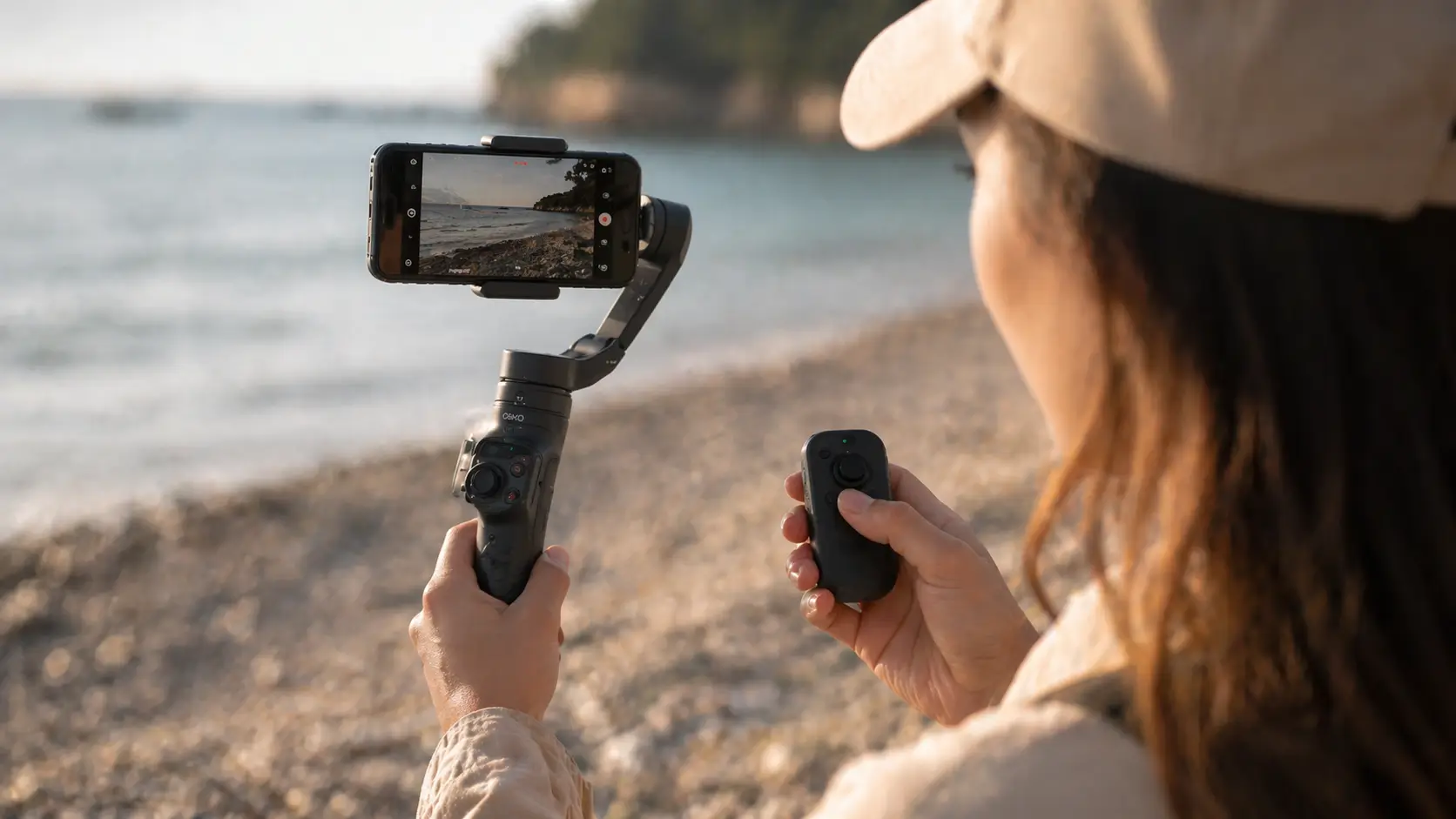

DJI adds wireless remote control to its latest smartphone stabilizer, and this upgrade may look simple at first glance, but it changes how people create content in real situations. If you already use a smartphone stabilizer, you know the biggest limitation has never been stabilization itself. The real problem has always been control. You need to stay close to the device, touch the screen, adjust settings manually, and break your flow every time something needs to change.
That interruption affects the final result more than most people realize. When you step out of position just to press a button, you lose timing, energy, and sometimes even the shot. That is where this update starts to make sense. DJI is not just adding a feature for marketing. It is addressing a real problem that creators face every day.
Why this upgrade matters in real use
DJI adds wireless remote control to its latest smartphone stabilizer in a way that actually improves the shooting experience. With a wireless touchscreen remote, you can control the stabilizer from a distance, adjust framing, and manage recording without touching the phone. You stay in position, you stay focused, and you keep the moment natural. That may not sound revolutionary when you read it, but once you use it, the difference becomes obvious.
In real-world situations, especially when filming alone, small improvements like this make a big impact. You no longer need to constantly move back and forth between the camera and your position. You can stay in the scene and still maintain full control. That changes the way you approach recording. It gives you more freedom to experiment and more confidence in your setup.
Content creation is evolving fast. People expect faster setups, smoother workflows, and fewer interruptions. DJI understands that shift. This update reflects a clear direction: mobile filmmaking is becoming more independent, more efficient, and more professional without adding unnecessary complexity.
What DJI Introduced With Its Wireless Remote Smartphone Stabilizer
When you look closely at what changed, it becomes clear why DJI adds wireless remote control to its latest smartphone stabilizer in a way that feels practical, not just cosmetic. DJI did not simply include a basic remote. It introduced a wireless touchscreen controller that gives users real control over their filming process.
With this system, you can start and stop recording remotely, adjust camera angles, switch between shooting modes, and monitor your framing in real time. You no longer need to walk back to the stabilizer or touch your phone every time you want to make a small change. That alone improves the workflow significantly.
The touchscreen makes the biggest difference. This is not just a button-based remote. You can actually see what your camera sees. That removes guesswork and allows you to make precise adjustments while staying in position. For solo creators, this changes everything. You can control your shot while staying in frame and focused on your performance.
In simple terms, this upgrade turns the stabilizer into more than just a tool for smooth video. It becomes a complete filming system that gives you both stability and control at the same time.
Why Wireless Control Matters More Than It Seems
At first, this feature may not sound like a big deal, but once you understand how it works in practice, it becomes clear why DJI adds wireless remote control to its latest smartphone stabilizer in a way that actually changes the filming experience. Most people underestimate how limiting manual control can be. Every time you walk back to the device, tap the screen, or adjust the angle by hand, you interrupt the flow and risk ruining the shot.
Wireless control removes that friction completely. You can set up the stabilizer at a distance, step into position naturally, and adjust framing without breaking the scene. That keeps your recording smooth and your performance consistent. You stay focused on the content instead of constantly managing the equipment.
This matters even more for solo creators. You no longer need someone behind the camera to help with adjustments. You control everything yourself, in real time, without leaving your position. That level of independence changes how you shoot. It gives you more confidence to experiment, try new angles, and capture better results without complicating your setup.
A Shift Toward More Professional Mobile Filmmaking
When DJI adds wireless remote control to its latest smartphone stabilizer, the goal goes beyond convenience. This change pushes smartphone filming closer to professional workflows that creators have used for years in traditional production. In that environment, remote monitoring, external controls, and a clear separation between the camera and the operator are standard. Those elements give crews more control, better coordination, and more consistent results.
Now, DJI brings that same logic into mobile content creation. With a wireless touchscreen remote, you can step away from the device and still manage framing, angles, and recording in real time. That creates a more controlled shooting environment, even when you work alone. You no longer need to interrupt the scene just to adjust something small.
This shift changes how people see smartphone stabilizers. They are no longer tools for casual use only. They start to fit into more advanced setups where planning, precision, and timing matter. Creators can approach their shots more strategically, experiment with composition, and maintain control without breaking the flow.
This is how mobile filmmaking evolves. It becomes more intentional, more controlled, and closer to professional standards without losing simplicity.
Real-World Use Cases
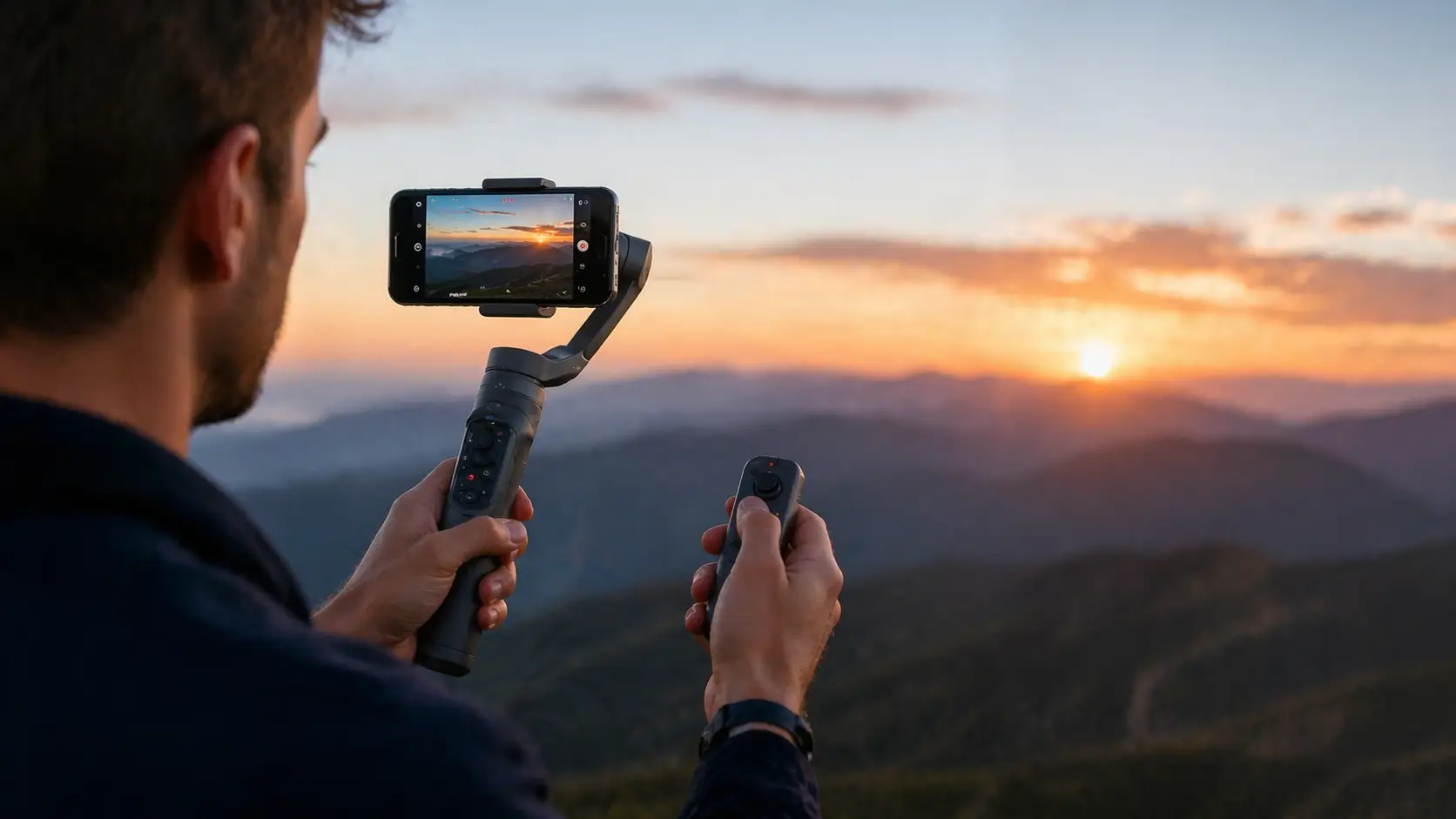
To really understand the impact of this upgrade, you need to look beyond the specs and focus on real situations. When DJI adds wireless remote control to its latest smartphone stabilizer, the benefit shows up in everyday use, especially for creators who deal with practical challenges while filming.
1. Solo Content Creation
If you record videos alone, you already know how frustrating it can be to manage framing and timing at the same time. You set up your shot, walk into position, then realize something needs adjusting. You walk back, fix it, and repeat the process. That constant movement breaks your rhythm and wastes time.
With wireless control, everything changes. You stay in position and control the camera from where you stand. You start recording, adjust framing, and stay focused on your performance. That keeps the energy natural and the workflow smooth.
2. Vlogging and Travel
When you film outdoors, especially while traveling, flexibility becomes essential. You may want to place your stabilizer on a tripod to capture a wider scene or a more cinematic angle. Without remote control, you need to keep going back to the device, which interrupts the moment.
Now, you manage everything remotely. You stay present in the scene while controlling the shot. That makes filming feel more natural and less stressful, especially in dynamic environments.
3. Group Shots and Events
Group content adds another layer of complexity. You need to position people, adjust the frame, and keep everyone engaged at the same time. Without a remote, you constantly move between the group and the camera.
With wireless control, you adjust framing while staying with the group. You keep communication clear and avoid unnecessary delays. That improves coordination and helps capture better moments.
4. Creative Shots
Creativity often requires distance, unusual angles, or movement that makes direct control difficult. This is where traditional setups limit what you can do.
With wireless control, you experiment more freely. You try different angles, adjust in real time, and maintain full control without being tied to the device. That freedom opens the door to more creative and dynamic shots.
How This Compares to Previous Stabilizers
When you compare older devices to what we see now, the difference becomes clear. DJI adds wireless remote control to its latest smartphone stabilizer in a way that goes beyond simple upgrades. Previous smartphone stabilizers focused almost entirely on stabilization. They did that job well, but control remained basic. Some models included Bluetooth triggers, but those features felt limited. You could start recording, maybe take a photo, but you could not truly manage the shot.
That lack of control created a gap. You still had to rely on your phone screen for framing and adjustments, which interrupted your workflow. There was no real sense of integration between stabilization and control.
Now, the focus has shifted. The new system combines stabilization, remote control, and real-time monitoring into one experience. That integration changes how the tool feels in practice. You are no longer just holding a stabilizer. You are using a connected system that responds to your input and gives feedback instantly.
This also simplifies the setup. Instead of adding extra accessories to gain more control, everything works within one ecosystem. That makes the entire process more efficient and more accessible for creators at any level.
The Role of Touchscreen in DJI Wireless Remote Stabilizer Control
When DJI adds wireless remote control to its latest smartphone stabilizer, the touchscreen is not just a design detail. It plays a central role in how the whole system works in real situations. A basic remote with buttons would already help, but the touchscreen takes it to another level by giving you direct visual feedback.
With that feedback, you can confirm framing instantly instead of guessing where the camera is pointing. You can switch modes quickly without stopping your recording flow, and you can make precise adjustments while staying in position. That saves time and prevents mistakes that usually happen when you need to go back and forth to check the screen.
This reduces guesswork in a very practical way. Beginners benefit because they can see exactly what they are doing, which makes the learning process easier. At the same time, more experienced creators gain better control and faster adjustments, which improves efficiency.
In mobile content creation, speed matters more than most people think. The faster you can react and adjust, the smoother your workflow becomes. That is why this touchscreen is not just a feature. It is a key part of the overall experience.
Impact of DJI Wireless Remote Smartphone Stabilizer on Content Creators
When DJI adds wireless remote control to its latest smartphone stabilizer, the biggest winners are content creators who depend on speed, flexibility, and consistency. This is the kind of feature that improves daily workflow in a very practical way. It reduces the small interruptions that usually slow down filming and break momentum.
For creators, that means less time adjusting equipment and more time focusing on the actual content. Instead of walking back to the stabilizer, checking framing manually, or restarting scenes after a bad angle, you can manage the shot more smoothly. That improves shot consistency and helps the final video look more polished.
It also lowers the barrier to more advanced filming techniques. You do not need a full crew or a second person behind the camera to get professional-looking results. One person can control the framing, recording, and shooting position more effectively, which makes solo production feel much more realistic.
This matters even more now because content creation keeps growing across platforms like YouTube, TikTok, and Instagram. More creators want higher production value without building complicated setups. That is exactly why this kind of upgrade matters. It gives creators more control without making the process harder.
What DJI Wireless Remote Stabilizer Means for the Smartphone Gimbal Market
When DJI adds wireless remote control to its latest smartphone stabilizer, it does more than upgrade one product. It signals a broader shift in the accessories market. Consumers no longer want simple add-ons that do only one basic job. They expect smarter accessories, better integration, and more control over how their devices work together.
That expectation is changing the category. A stabilizer used to be a passive tool. You mounted your phone, turned it on, and relied on it to smooth movement. Now the accessory becomes interactive. It communicates, responds, and gives users more control over the creative process. That changes how people judge value. They are not only buying hardware anymore. They are buying workflow improvement.
DJI clearly understands that shift and is responding to it. The company is turning accessories into smart tools that feel more connected to the way modern creators actually work. That puts pressure on competitors. If users respond well to this kind of control, other brands will likely move in the same direction.
Wireless control, remote monitoring, and smarter filming tools may soon become standard expectations instead of premium extras. That is often how innovation spreads in this market. One useful feature appears, creators adopt it, and then the entire category starts moving around it.
Limitations of DJI Wireless Remote Smartphone Stabilizer to Consider
Even though DJI adds wireless remote control to its latest smartphone stabilizer in a way that improves the user experience, the feature still has limitations. It is useful, but it is not perfect, and it helps to stay realistic about that.
Battery life is the first thing to watch. Now you are working with more than one powered element, which means both the stabilizer and the remote need enough charge to keep the workflow smooth. If one device runs low, the convenience disappears quickly.
Connectivity range also matters. Wireless control works best within a stable distance, but that range can vary depending on the environment. In crowded or signal-heavy areas, performance may not feel as reliable as it does in controlled settings.
Lag is another factor. Even a small delay can affect framing or timing when you are filming movement or trying to react quickly. That may not be a major issue in most situations, but it still matters for creators who need precise control.
So yes, the upgrade is meaningful, but it is still an evolution, not a final solution. DJI will likely keep refining these areas in future versions, which is exactly how this kind of product improves over time.
Why DJI Wireless Remote Stabilizer Keeps the Brand Ahead
When you look at the bigger picture, it becomes clear why DJI adds wireless remote control to its latest smartphone stabilizer in a way that actually matters. DJI has built its reputation by focusing on practical improvements, not just adding features for marketing. This update follows that same approach. It does not try to impress with something flashy. It solves a real problem that creators deal with every day.
Control and flexibility have always been the weakest points in mobile filming. Stabilization improved over the years, but managing the shot still required constant interaction with the device. That interruption affected both workflow and results. DJI understood that gap and chose to fix it instead of ignoring it.
The wireless remote directly addresses that limitation. It gives users more control without complicating the setup. That balance is what sets DJI apart. The company focuses on how people actually use its products, not just how they look on paper.
This is why DJI continues to lead. It listens to real-world needs and improves the experience in ways that make a difference when you are actually creating content.
If you are serious about mobile content creation, tools like DJI’s stabilizers work even better when combined with compact cameras like the DJI Osmo Pocket 4, which offers advanced features for smoother and higher-quality video recording.
The Bigger Picture: Mobile Content Is Becoming More Advanced
The fact that DJI adds wireless remote control to its latest smartphone stabilizer says something bigger than just “here is a new accessory.” It shows how far mobile content creation has come. Smartphones are no longer just communication devices. They are now serious tools for video production, social media content, travel filming, vlogging, and even commercial work.
That shift has been building for years, but accessories like this push it further. Every time a new tool adds more control, more flexibility, and a more professional workflow, the gap between mobile gear and traditional equipment gets smaller. You no longer need a large setup to create high-quality content. In many cases, a phone and the right accessory are enough.
This update makes that trend even clearer. Mobile filmmaking is becoming more serious, the tools are becoming more advanced, and users now expect a level of control that used to belong only to dedicated camera systems. That expectation changes the market.
DJI is not just reacting to this trend. The company is actively shaping it. By improving both usability and control, it is helping define what modern mobile filmmaking should look like.
What to Take Away From DJI Wireless Remote Smartphone Stabilizer Upgrade
When you step back and look at the bigger picture, it becomes clear that DJI adds wireless remote control to its latest smartphone stabilizer for a reason that goes beyond a simple upgrade. This change reflects a real shift in how content creation tools are evolving. It shows that control now matters just as much as stabilization. Smooth video is no longer enough if you cannot manage your shot efficiently.
Flexibility also plays a huge role. The more freedom you have while filming, the better your workflow becomes. You spend less time adjusting equipment and more time focusing on the actual content. That is where this feature makes a real difference. It removes small frustrations that add up over time and slow you down.
Mobile tools are also becoming more professional. Features that once belonged to high-end camera setups are now appearing in smartphone accessories. This closes the gap between casual and professional content creation.
If you create content regularly, this kind of upgrade can save time and improve your results. It allows you to stay focused, stay in the moment, and concentrate on creativity instead of constantly managing your gear.
DJI continues to innovate in the mobile filming space, as seen in its official product lineup and updates available on its website
Executive Summary
This update may not look dramatic, but it is practical and meaningful. DJI is focusing on real-world usage, not just specifications.
Wireless control brings convenience, independence, and better creative control. For many users, that is exactly what was missing.
As mobile content continues to grow, tools like this will become more important. They do not replace professional equipment, but they bring many of the same capabilities into a simpler, more accessible format.
