
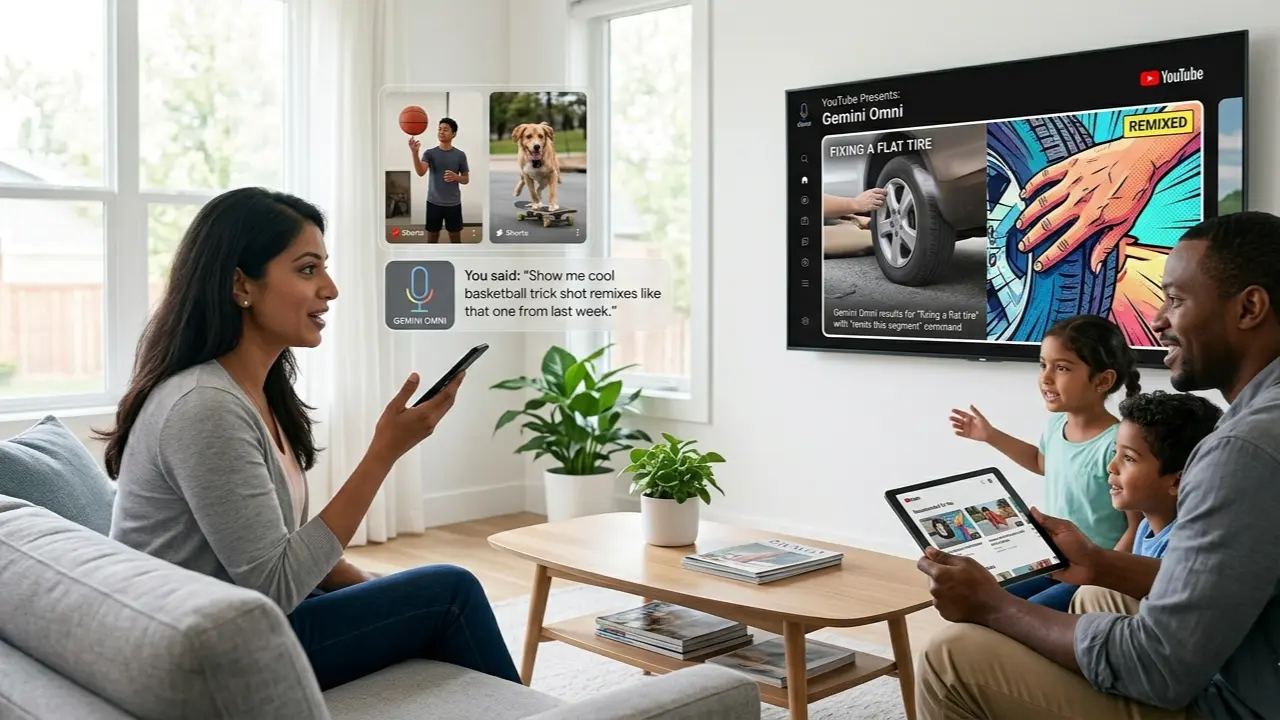

The launch of Ask YouTube Gemini Omni marks the exact moment the landscape of online video discovery officially shifted. Historically, users relied on static text inputs to find relevant content. However, this traditional paradigm is officially over. At the Google I/O 2026 conference, Google announced a massive structural upgrade to its video ecosystem. This move effectively blurs the lines between search engines, generative AI, and advanced creator tools.
By introducing the “Ask YouTube” conversational search interface, the platform fundamentally changes user engagement. Furthermore, by integrating the Gemini Omni model directly into YouTube Shorts, Google introduces native multimodal AI video remixing to the masses. Consequently, the platform is moving away from rigid keyword matching. Instead, the focus shifts entirely toward true semantic and deep multimodal understanding. This means the algorithm now parses actual audio, visual frames, and spoken context simultaneously.
As a result of this structural evolution, creators and digital marketers must completely rethink their distribution strategies. The old tricks of metadata manipulation are losing their power. Instead, long-term success will belong to those who understand how AI indexes visual data under the hood. For instance, algorithmic optimization is transitioning from simple tag optimization into rich, conceptual data alignment.
Here is an in-depth breakdown of these massive computational updates. We will explore how they function under the hood. In addition, we will analyze how they will permanently alter YouTube SEO, platform algorithms, and the future of digital content creation.
1. Understanding Ask YouTube: How AI Reinvents Video Search
For over two decades, searching for video content relied entirely on indexing metadata: titles, descriptions, tags, and automated transcripts. If a user didn’t type the exact right combination of keywords, highly relevant content could remain buried.
“Ask YouTube” completely disrupts this model. Powered by Google’s advanced large language models, it introduces an interactive, conversational layer directly into the platform’s search architecture.
While YouTube leverages multi-modal AI to dominate short-form engagement, other tech giants are fighting for long-form visual dominance. Explore how the market is splitting in our deep dive into the Spotify and Apple video podcast strategy and its massive creator economy shift.
Instead of simply serving a static list of thumbnails, the conversational engine synthesizes information from across YouTube’s massive library. Consequently, users receive real-time, highly tailored answers directly mapped to their intent. It delivers a structured, interactive response, pulling exact timestamped moments from relevant long-form videos and Shorts.
Furthermore, users can ask follow-up questions to refine their results without starting a new search from scratch. The feature is currently rolling out as an experimental tool for adult YouTube Premium subscribers in the United States, with a wider global expansion planned.
2. Gemini Omni Integration: Transforming YouTube Shorts with AI Remixing
While conversational search changes how viewers find content, the integration of Gemini Omni Flash into YouTube Shorts changes how creators build it.
Google has embedded native multimodal capabilities directly into the YouTube Shorts Remix tool and the standalone YouTube Create application. Because Gemini Omni is built from the ground up to process text, audio, and visual data simultaneously, it possesses an advanced understanding of environmental consistency, lighting, physics, and character tracking.
| Feature Component | Capability & Technical Function |
| Generative Remixing | Creators can use text and image prompts to completely overhaul the background, aesthetic, or art style of a Short while preserving the subject’s core movements. |
| Style Transformations | Users can command the AI to shift a video’s visual identity—for instance, changing a modern urban backdrop into a “vibe from the 1990s” or a stylized cinematic animation. |
| Physical Integration | The model smoothly inserts new digital elements or creators into existing content, dynamically adjusting shadows and reflections to match the original environment. |
The Safeguard Infrastructure: SynthID & Attribution
To address industry concerns regarding digital copyright and misinformation, Google has built rigorous guardrails into this rollout. Every piece of media manipulated or generated by the Gemini Omni model within Shorts will automatically include SynthID digital watermarking and deeply embedded metadata.
Crucially, any remixed Short will feature mandatory, permanent attribution links pointing back to the original content creator. Additionally, creators retain full autonomy and can opt-out, preventing their content from being used in AI remixes entirely.
3. The Search Shift: Aligning Video Strategy with Ask YouTube and Gemini Omni Capabilities
The introduction of multimodal AI analysis means that the algorithm no longer just “reads” text about a video—it actively “watches” and “hears” the video itself. This shift marks a major evolution for content creators and digital marketers.
The Death of Over-Optimized Clickbait
Historically, bad actors could manipulate search rankings using sensationalized titles and keyword-stuffed descriptions, even if the video content failed to deliver on its promise. However, with conversational AI search, the system fundamentally changes. It analyzes the actual visual and auditory substance of the video before serving it as an answer. As a result, if a video fails to match the AI’s internal semantic understanding of the user’s query, its distribution will plummet. Therefore, creators must prioritize authentic content delivery over metadata tricks.
Optimizing for Semantic Clarity in AI Video Search Results
To stay visible in an ecosystem driven by conversational search, creators must prioritize production clarity:
-
Structured Audio Delivery: Clear, well-paced speech makes it easier for conversational models to parse core concepts.
-
Distinct Visual Cues: High-clarity framing, deliberate editing transitions, and clear subject matter allow the multimodal AI to accurately index specific timestamps.
-
Direct Value Injection: Content that gets straight to the point will be heavily favored by an AI designed to pull exact, instantaneous answers for the end user.
At the Google I/O 2026 conference, Google announced a massive structural upgrade to its video ecosystem. According to the official Google I/O 2026 Keynote announcements, this move blurs the lines between search engines, generative AI, and creator tools.
Revised Writing Style (Future Framing Optimized)
Instead of relying on traditional assumptions about how YouTube search works, this new AI-driven direction may significantly change how video discovery evolves over time.
The introduction of conversational search and multimodal AI tools appears to signal a shift toward more semantic and context-aware content indexing.
Rather than completely replacing existing systems, these updates could introduce a layered approach where keyword-based search and AI interpretation work together.
For creators, this evolution is expected to influence how content is discovered, especially as platforms increasingly rely on AI models that interpret both visual and audio data.
Overall, YouTube’s direction suggests a gradual transformation rather than an immediate replacement of existing ranking systems.
What Creators Should Focus On in Ask YouTube Gemini Omni AI Search
To stay competitive in this new AI-driven YouTube ecosystem, content creation needs to evolve beyond traditional SEO tactics and focus more on how AI systems interpret real video content.
Creators should prioritize:
- Clear and structured speech delivery, ensuring that spoken content is easy for AI systems to understand, transcribe, and segment into meaningful moments.
- Strong visual storytelling, where each scene supports the narrative clearly, allowing multimodal AI systems to interpret context through visual patterns, actions, and environment.
- Direct value delivery early in the video, since engagement signals and AI-driven summarization systems increasingly reward content that answers user intent quickly.
- Natural language aligned with real user queries, making content more discoverable through conversational search systems like Ask YouTube, which interpret intent rather than relying on exact keyword matches.
In this environment, success is no longer driven by metadata optimization alone, but by how well content can be understood, summarized, and contextually mapped by AI systems analyzing both audio and visual layers of a video.
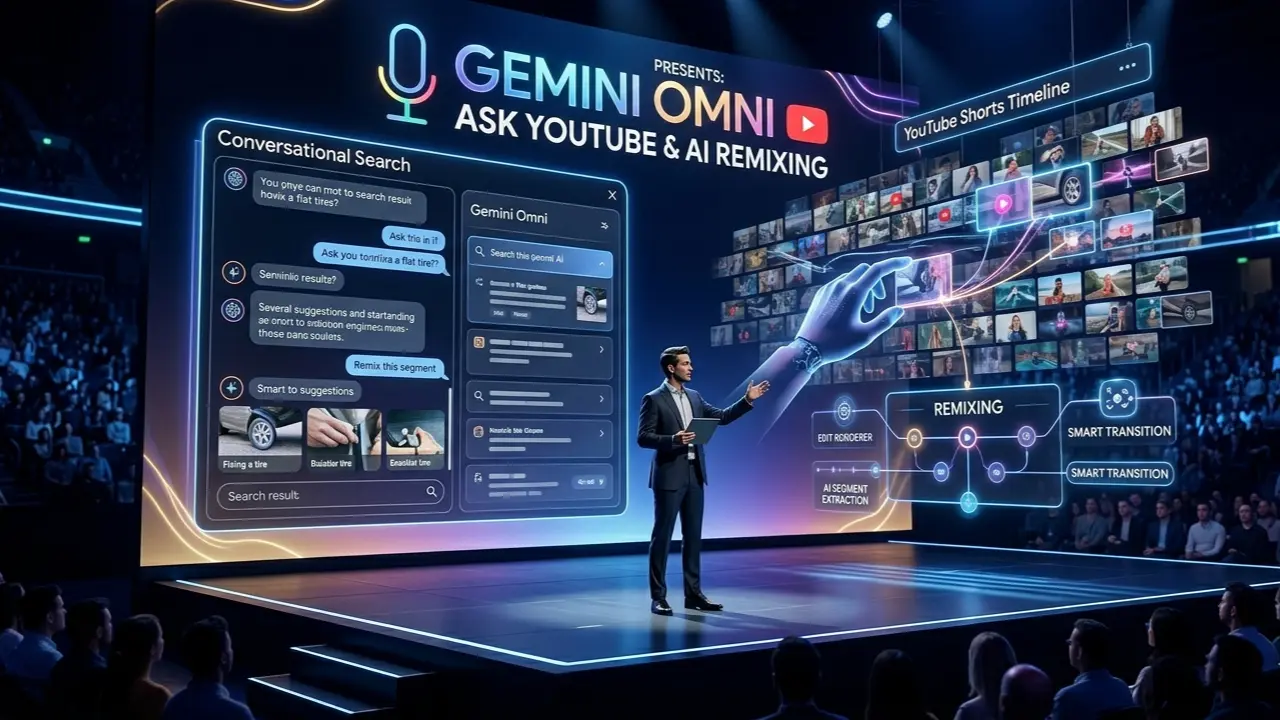
Frequently Asked Questions (FAQ)
General & Access
What exactly is “Ask YouTube”? “Ask YouTube” is an AI-powered conversational search feature.
Instead of relying on traditional keyword searches, it allows users to ask complex, natural-language questions about video content. Consequently, viewers receive structured, synthesized answers alongside direct, timestamped video recommendations.
Who has access to “Ask YouTube” right now? The feature is currently experimental and available exclusively to adult YouTube Premium subscribers in the United States. However, eligible users can easily opt-in to test it. Furthermore, a global expansion to wider audiences is already planned for later phases.
Which AI model powers these new features? The conversational search tool is driven by Google’s large language models. Meanwhile, the advanced video remixing tools inside YouTube Shorts are powered natively by Gemini Omni Flash—Google’s specialized, high-speed multimodal AI model.
Executive Summary
The dual launch of “Ask YouTube” and Gemini Omni for Shorts represents a fundamental shift in user behavior. YouTube is transitioning from a traditional video repository into an active, intelligent computational space. In this new ecosystem, users converse with content rather than merely viewing it passively. For creators, adapting to this shift means moving away from rigid keyword optimization. Instead, the focus must shift entirely toward high-density, authentic, and clearly structured value.
