
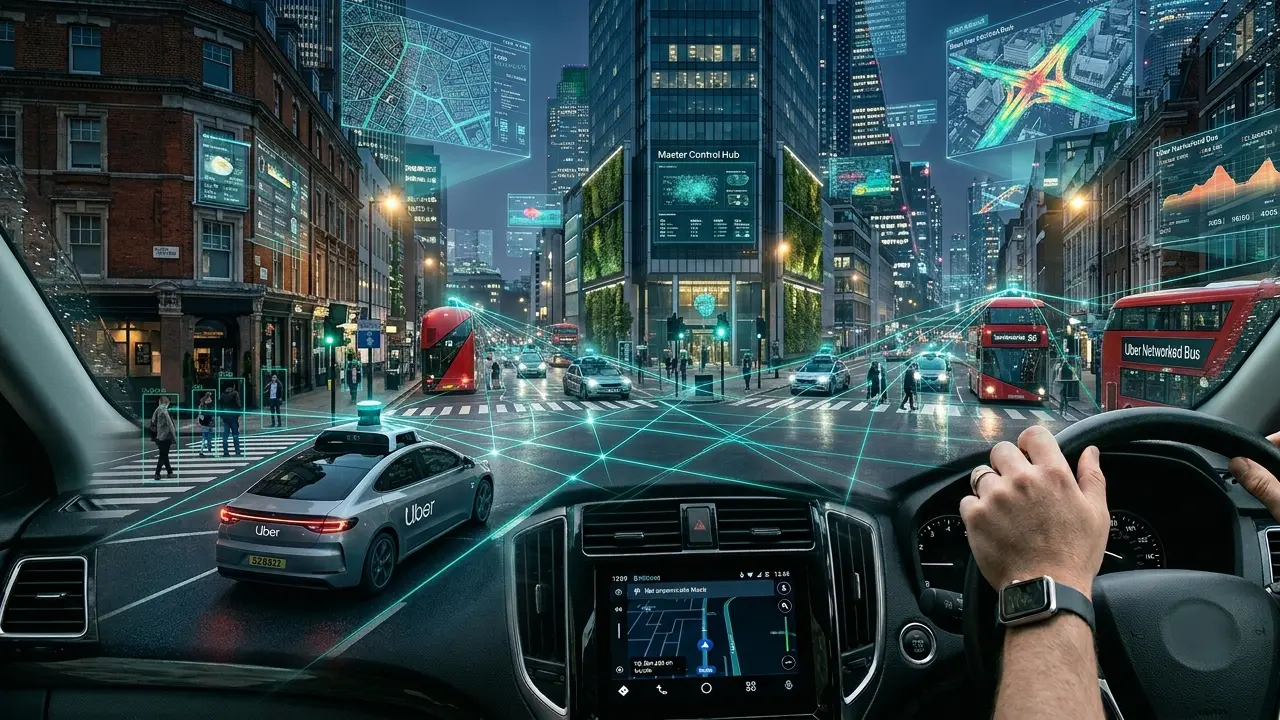

Uber’s next major move in autonomous driving may not start with robotaxis alone. It may start with the millions of human drivers who already move through cities, highways, suburbs, airports, and busy streets every day using the Uber platform. That makes this story bigger than a simple self-driving car update. It shows how Uber drivers self-driving cars technology could become connected through real-world data, daily road experience, and artificial intelligence.
The company is exploring how its large driver network could support self-driving companies by collecting road information at scale. In practice, some vehicles could work like moving sensors. They could help capture traffic patterns, road changes, unusual driving situations, weather conditions, lane behavior, construction zones, and other details that autonomous systems need to understand before they can operate safely in more places.
This matters because self-driving technology does not improve only inside laboratories. It improves when engineers and AI systems study real roads, real drivers, and real problems. A robotaxi fleet can collect useful data, but Uber already has access to a huge ride-hailing network that moves through many different environments every day. That gives the company a possible advantage in the autonomous vehicle race.
Recent reporting says Uber’s AV Labs currently uses a smaller dedicated fleet with sensors. However, the bigger ambition appears to be much wider: using parts of Uber’s global driver network as a real-world data platform for autonomous vehicle companies.
For readers, the key point is simple. This is not just another headline about robotaxis. It is a sign that the future of autonomous mobility may depend on who controls the best road data, not only who builds the first self-driving car. Uber could become important because it already understands riders, drivers, routes, traffic demand, and city movement at massive scale.
Uber’s Driver Network Could Become a Massive AI Sensor Grid
Uber already has something many self-driving companies still struggle to build: a huge network of vehicles moving through real streets every day. These cars pass through city centers, highways, airports, suburbs, school zones, construction areas, rainy roads, traffic jams, and unpredictable intersections. That daily movement creates something valuable for the future of autonomous driving: real-world road experience.
This is where Uber drivers self-driving cars technology becomes important. Autonomous systems need more than perfect test tracks and clean simulations. They need data from real situations, where pedestrians cross suddenly, drivers break rules, lanes disappear, traffic lights fail, and weather changes road behavior.
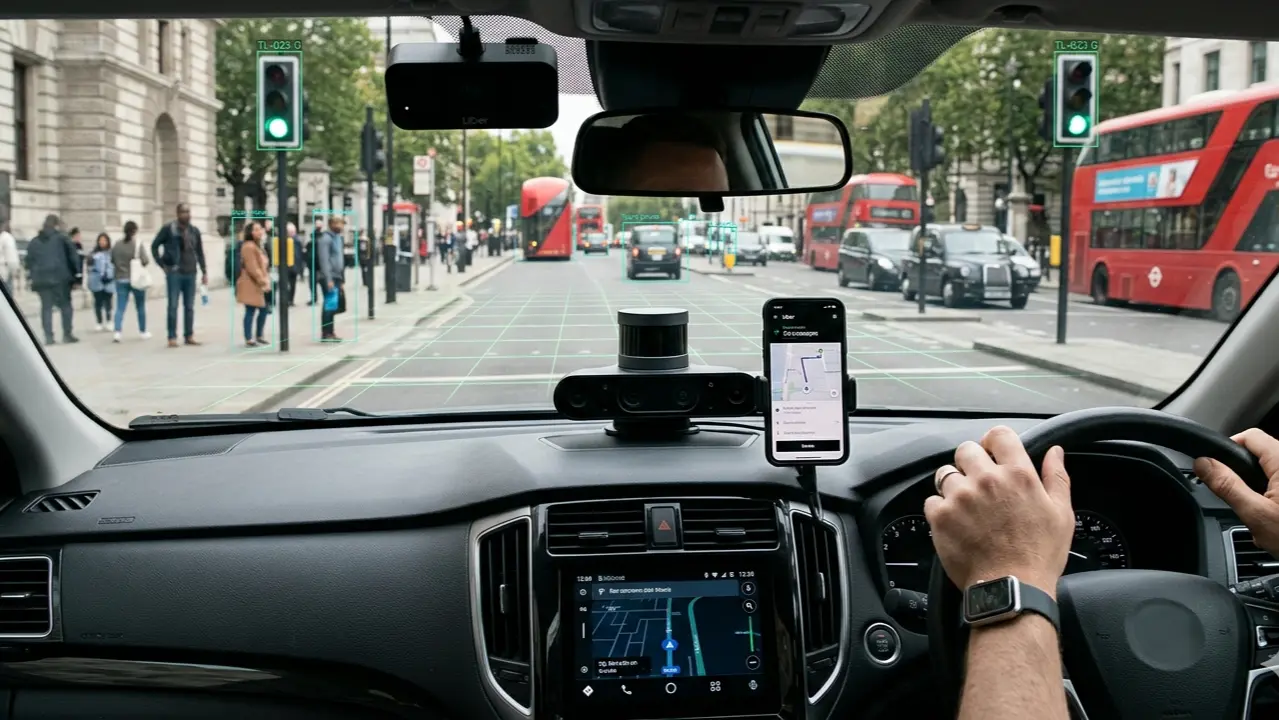
A sensor-equipped Uber vehicle could collect useful information about road layout changes, traffic flow, pedestrian movement, lane markings, weather conditions, unusual driving patterns, and difficult edge cases. These details can help self-driving companies understand how roads actually work, not just how they should work on a digital map.
In simple terms, Uber drivers could help create a living map of the road. That map would update through daily driving, not occasional testing. This gives Uber a strong position because its platform already operates in the real world, at scale, with human drivers who understand local roads better than any simulation.
Why Real-World Driving Data Matters
Self-driving technology needs real roads, not only computer simulations. AI models can learn from controlled tests, but public roads create harder lessons. Drivers face sudden braking, confusing road signs, pedestrians, cyclists, damaged lane markings, roadworks, and aggressive traffic behavior. These situations teach autonomous systems how mobility works outside perfect conditions.
This is why Uber drivers self-driving cars data could become valuable. Uber operates across many cities, road types, and traffic environments. A robotaxi company may test vehicles in selected areas, but Uber’s network already moves through different markets every day. That gives Uber a possible scale advantage.
The strategy also shows a smarter business direction. Uber does not need to build every self-driving car system by itself. Instead, it can support the companies building those systems. Uber can offer demand, routes, trip data, mapping knowledge, fleet operations, and real-world road intelligence.
That makes Uber more than a ride-hailing app in this story. It becomes a possible infrastructure partner for autonomous vehicle companies. If Uber uses this data responsibly, with clear privacy rules and fair driver participation, it could help self-driving technology improve faster while giving drivers a clearer role in the transition.
What This Means for Uber Drivers and Self-Driving Cars
This move could change how people understand Uber’s role in the self-driving car industry. For many years, Uber looked like a ride-hailing company first. Now, the company appears to be positioning itself as something larger: a data, logistics, and infrastructure partner for autonomous mobility.
That is why Uber drivers self-driving cars strategy matters. Uber does not need robotaxis to replace every human driver before it benefits from autonomous technology. It can create value earlier by helping self-driving companies collect road intelligence, understand demand, improve mapping, and prepare for safer deployment.
The logic is clear. Autonomous companies need real-world driving data. Uber already has drivers on real roads. Those drivers cover different routes, traffic patterns, neighborhoods, and driving conditions every day. That road activity can help AI systems learn faster and handle more complex situations.
This could turn Uber’s current driver network into a bridge between today’s human-driven ride-hailing market and tomorrow’s autonomous vehicle industry. However, Uber must handle this transition carefully. Drivers deserve transparency, clear consent, and fair compensation if their vehicles help create valuable data. Without trust, the strategy could face serious public criticism.
Why This Strategy Is Smart — But Complicated
From a business perspective, this strategy makes sense. Uber has scale, global reach, daily road activity, and millions of drivers who already move through real traffic conditions. Few companies can match that level of road exposure. For self-driving firms, this kind of network could help them understand how roads behave in normal life, not only during controlled tests.
That is why Uber drivers self-driving cars strategy looks powerful. Uber could turn everyday trips into useful driving intelligence for autonomous vehicle development. It could support mapping, traffic analysis, edge-case detection, and AI training without starting from zero.
But the plan also creates serious questions. The biggest one is trust.
Drivers need clear answers. What data will Uber collect? Who owns that data? Will drivers earn money from it? How will Uber protect privacy? Could this data help build systems that later reduce human driving jobs?
These questions matter because road data can include sensitive details. Cameras may capture people, vehicles, locations, and behavior in public spaces. Uber says it does not use this data to identify, track, or profile individuals. That promise matters, but users and drivers need more than promises. They need transparency, simple explanations, strong privacy protections, and fair rules.
In my view, the strategy only works if Uber treats drivers as partners, not just data sources. If drivers help create value, they should understand the process and benefit from it.
The Driver Dilemma in Self-Driving Cars Opportunity or Risk
This is where the story becomes more than technology. It becomes a question about work, value, and fairness. For drivers, the plan could create a new income opportunity if Uber pays them to carry sensors or join data-collection programs. Their cars would no longer provide only rides. They could also help improve autonomous driving systems.
That is why Uber drivers self-driving cars debate deserves attention. Drivers may see this as a chance to earn more, especially if Uber creates transparent programs with clear payment terms. But they may also see a serious risk.
The concern is simple. Drivers could help train technology that may reduce the need for human drivers in the future. That fear does not come from imagination. It comes from the direction of the industry. If self-driving cars become cheaper, safer, and easier to operate, ride-hailing companies may use them more often in selected cities.
So the real issue is not whether drivers can help train AI. They can. The deeper question is whether drivers will share fairly in the value their data creates. Uber needs trust, consent, and fair compensation to make this strategy feel like partnership, not exploitation.
Who Should Care About Uber Drivers Self-Driving Cars
Uber Drivers in the Self-Driving Transition
Uber drivers should care first because this plan could affect their future role on the platform. If Uber creates paid data-collection programs, drivers could gain another income stream. Their vehicles could provide rides and also support road intelligence. But drivers need clear rules. They should understand what data Uber collects, how Uber uses it, who owns it, and whether participation remains optional.
Self-Driving Companies
Self-driving companies should care because Uber drivers self-driving cars data could offer real-world road information at a scale that many autonomous vehicle firms cannot build alone. Testing in one city helps, but data from many roads, traffic styles, and driving conditions can make AI systems more useful.
Investors Watching Autonomous Driving Growth
Investors should care because this strategy could give Uber a new growth path. Uber would not depend only on ride-hailing, delivery, or direct robotaxi operations. It could also become a data and infrastructure partner for autonomous mobility.
Regulators and Self-Driving Data Concerns
Regulators should care because large-scale road data collection creates real privacy and public safety questions. Cameras and sensors may capture streets, vehicles, pedestrians, and locations. Governments need clear rules that protect people without blocking responsible innovation.
Everyday Riders and the Future of Self-Driving Cars
Everyday riders should care because this strategy could bring self-driving rides into ride-hailing apps faster. If autonomous systems learn from better road data, they may become safer and more reliable. However, riders also need transparency. They should know when they ride in autonomous vehicles, how safety works, and how companies protect their data.
How Uber Is Building the Missing Layer of Self-Driving Cars
The most important part of this story is not the sensor hardware. The real story is Uber’s platform strategy. Self-driving cars need cameras, sensors, software, and powerful AI models, but they also need something harder to build: real-world operating knowledge.
That is where Uber has an advantage. The company understands routes, rider demand, driver behavior, city movement, pricing patterns, airport traffic, peak hours, and local transport habits. These details matter because autonomous vehicles do not operate in isolation. They need a full mobility system around them.
This is why Uber drivers self-driving cars strategy could become a missing layer in autonomous driving. Uber does not need to manufacture every robotaxi or own every self-driving system. It can connect autonomous vehicle companies with riders, maps, demand, logistics, and road intelligence.
Even after selling its internal self-driving unit years ago, Uber kept its most valuable asset: the marketplace. Autonomous companies may build the vehicles, but they still need passengers, trusted apps, routes, support systems, and large-scale deployment.
In my view, Uber wants to own the road intelligence layer of the autonomous future. That means the company could profit not only from rides, but also from the data, infrastructure, and partnerships that help self-driving vehicles become practical in real cities.
Why This Matters for the Future of Self-Driving Mobility
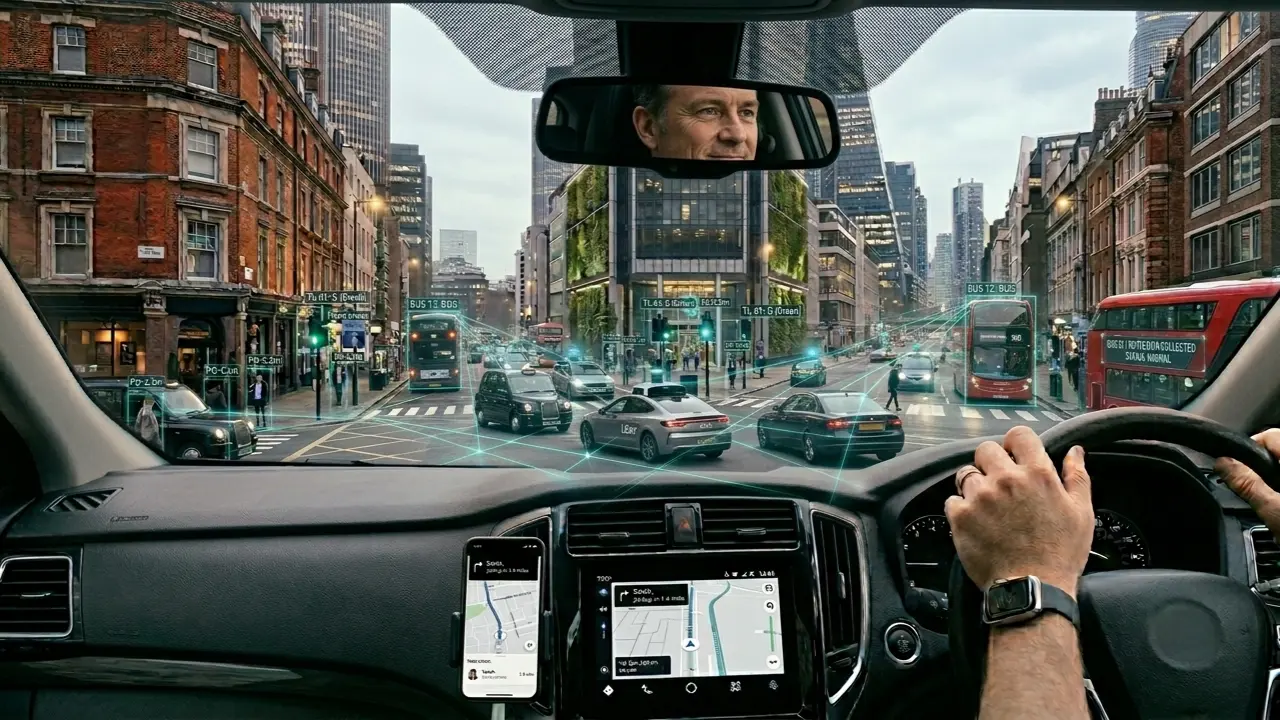
Self-driving cars will not arrive everywhere at the same time. They will likely expand slowly, city by city, route by route, and use case by use case. Some areas may support robotaxis early because they have clear roads, strong mapping, predictable traffic, and supportive regulation. Other areas may take much longer because they have complex streets, poor markings, difficult weather, or unpredictable driving behavior.
That makes road data extremely important. A company with better real-world intelligence can understand where autonomous vehicles work well, where they fail, and where deployment makes business sense. This is where Uber drivers self-driving cars strategy could give Uber a useful advantage.
Uber’s driver network could help answer practical questions. Which roads are ready for robotaxis? Which cities offer the safest conditions for autonomous rides? Where do human drivers slow down, brake suddenly, or avoid certain routes? Which traffic patterns confuse AI systems? Which neighborhoods need better maps before self-driving vehicles can operate safely?
These questions matter because the future of mobility will depend on trust, safety, and reliability. People will not accept self-driving rides just because the technology sounds impressive. They will accept them when the service feels safe, predictable, and useful in everyday life.
In my view, Uber’s strongest opportunity is not only launching robotaxis. Its bigger opportunity may be helping the entire autonomous vehicle industry understand real roads better. If Uber handles privacy, driver consent, and safety responsibly, its driver network could become one of the most valuable sources of mobility intelligence in the world.
This trend becomes even clearer when looking at how AI is entering real vehicles, as explored in this article on Google bringing Gemini AI to millions of vehicles worldwide.
The Bigger Picture of Uber’s Robotaxi and Self-Driving Ambitions
Uber’s sensor-grid idea does not stand alone. It fits into a wider robotaxi strategy. The company already works with autonomous vehicle partners, and its recent activity shows that Uber wants to play a major role in the next stage of transportation.
In 2026, Lucid, Nuro, and Uber unveiled a production-intent robotaxi based on the Lucid Gravity SUV, with plans connected to commercial deployment in the San Francisco Bay Area. That matters because it shows Uber is not only talking about autonomous mobility. It is building partnerships that could bring self-driving rides closer to real customers.
This is where Uber drivers self-driving cars strategy becomes even more important. If Uber can combine robotaxi partnerships with real-world data from human-driven vehicles, it gains two advantages at once: future autonomous supply and present-day road intelligence.
The bigger picture is clear. Uber wants to stay central whether rides come from human drivers, robotaxis, or mixed fleets. That is a smart position. The transition to autonomous vehicles will not happen overnight, so Uber needs a strategy that works during the transition period. Human drivers, data collection, mapping, fleet operations, and robotaxi partnerships may all become part of the same mobility ecosystem.
Uber has already outlined its long-term vision for autonomous mobility through its Official autonomous Platform.
Executive Summary
Millions of drivers could help Uber shape autonomous mobility by collecting real-world road data. The Uber drivers self-driving cars strategy may create value, but Uber must protect privacy, explain consent clearly, and pay drivers fairly. If handled well, everyday trips could help self-driving systems become safer and smarter.
FAQ
How could Uber drivers help self-driving cars?
Uber drivers could help collect real-world road data through sensor-equipped vehicles. This data may help autonomous vehicle companies train and improve self-driving AI systems.
Is Uber replacing drivers with self-driving cars?
Not immediately. Human drivers remain central to Uber’s business today. However, this strategy shows that Uber is preparing for a future where autonomous vehicles play a bigger role.
Why is driver data important for autonomous vehicles?
Self-driving systems need real-world data to understand traffic, road changes, pedestrians, weather, and unusual driving situations that simulations may not fully capture.
