
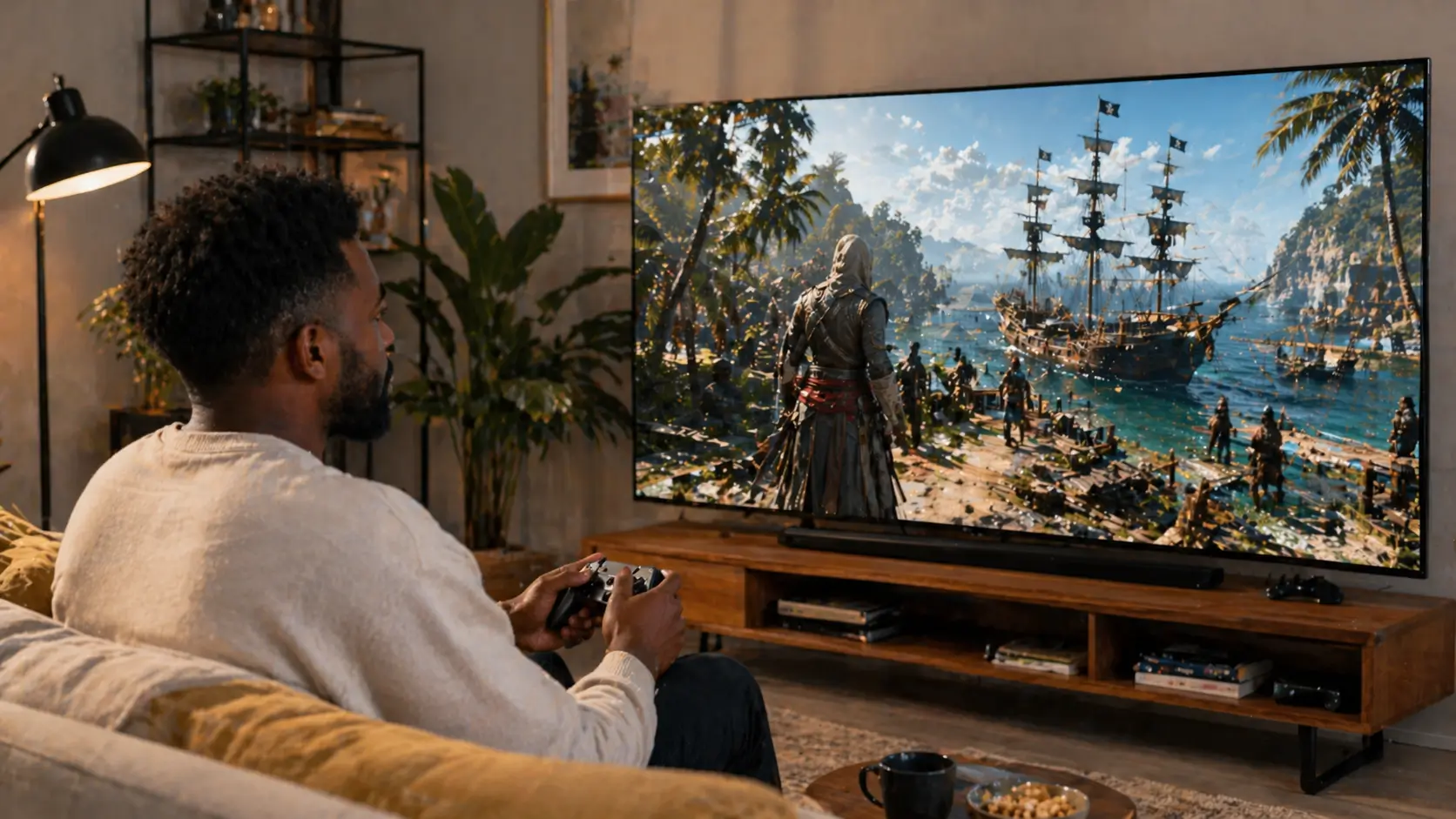

Assassin’s Creed Black Flag Resynced Signals a New Chapter for Ubisoft
Assassin’s Creed Black Flag Resynced marks a critical moment for Ubisoft, as the company looks to rebuild player confidence after a period of mixed reception. By bringing back one of the franchise’s most respected titles, Ubisoft is not just revisiting the past—it is testing whether it can still deliver the kind of immersive, high-quality experience players expect today.
Many fans still remember Black Flag for its open-world naval exploration, rich pirate atmosphere, and the compelling journey of Edward Kenway. However, expectations have changed. Players now demand more than nostalgia. They want smoother gameplay, modern visuals, and a refined experience that respects what made the original special while improving what no longer meets current standards.
Ubisoft is not simply revisiting a fan-favorite title.
The company is using Assassin’s Creed Black Flag Resynced as a strategic opportunity to reconnect with players who feel the franchise has lost some of its original excitement. At its peak, Assassin’s Creed IV: Black Flag stood out because it delivered something different—true freedom, open-world exploration, naval combat, stealth, and a strong sense of adventure that felt natural rather than forced.
That difference still matters today, especially in a market where many modern games prioritize scale over meaningful player experience.
Many modern releases focus heavily on scale but often lose the sense of immersion that made earlier titles memorable. Black Flag succeeded because it balanced gameplay systems with atmosphere and player freedom. Ubisoft now faces the challenge of preserving that balance while updating the experience for modern expectations.
From a business perspective, this return carries real weight. Ubisoft has faced increasing pressure to deliver more consistent and polished releases. A successful remake could help rebuild momentum and restore confidence in the brand. However, failure would likely reinforce existing concerns about the company’s direction.
For longtime fans, nostalgia plays a role, but it is not enough on its own. Today’s players expect meaningful improvements, not just visual upgrades. For newer audiences, the remake must feel like a complete, modern experience rather than a product tied to the past. That balance is difficult, and Ubisoft cannot afford to get it wrong.
In that sense, Assassin’s Creed Black Flag Resynced represents more than a remake. It is a direct test of whether Ubisoft can protect its legacy while proving it still understands what players value in today’s gaming landscape.
What Is Assassin’s Creed Black Flag Resynced?
Assassin’s Creed Black Flag Resynced is expected to go far beyond a simple visual upgrade. Instead of only improving resolution or textures, the project appears to follow a full remake approach. This means Ubisoft has the opportunity to rebuild core elements of the experience for modern hardware while preserving the identity that made the original so successful.
To understand the difference, it helps to look at how remasters and remakes work. A remaster usually focuses on visual improvements and performance optimization. In contrast, a remake allows developers to rethink the game at a deeper level. This can include redesigned lighting systems, more realistic animations, richer environments, improved combat mechanics, more responsive stealth, and faster loading times.
For a game like Assassin’s Creed IV: Black Flag, these upgrades are not just technical—they directly affect immersion. The original experience relied heavily on exploration, naval combat, and atmosphere. If those elements feel outdated, the entire experience loses impact. That is why a deeper remake approach matters.
However, the biggest challenge is balance.
At the same time, expectations are clear. Fans want meaningful improvements, not unnecessary changes.
Players expect the Assassin’s Creed Black Flag remake to feel modern, but they do not want it to lose its identity.
The Caribbean setting, pirate fantasy, ship battles, and Edward Kenway’s story are not optional features—they are the foundation of the experience. Any major changes to these elements could risk alienating longtime fans.
From a player perspective, expectations are clear. Fans want meaningful improvements, not unnecessary changes.
If Ubisoft focuses on refining gameplay systems while preserving the core experience, the remake has strong potential. Otherwise, it could feel disconnected from what made the original special.
When executed well, Assassin’s Creed Black Flag Resynced could serve two audiences at once. It can offer new players a polished entry point…It can offer new players a polished entry point into one of the franchise’s most respected titles, while giving longtime fans a compelling reason to return to a world they already value.
Why Black Flag Still Matters
Assassin’s Creed Black Flag Resynced matters because the original game still holds a unique position within the franchise. Assassin’s Creed IV: Black Flag did not just follow the established formula—it expanded it. By combining stealth, open-world exploration, pirate adventure, and naval combat, the game delivered an experience that felt fresh and distinctive at the time of its release.
The Caribbean setting played a major role in that success. Players were not limited to structured missions. Instead, they could sail across open waters, discover hidden islands, hunt for treasure, upgrade their ship, and engage in large-scale sea battles. This level of freedom created a natural gameplay rhythm that many players still remember. It did not feel like a traditional Assassin’s Creed game with added mechanics. It felt like a complete pirate experience built within the Assassin’s Creed universe.
That design approach still stands out today.
Many modern games offer larger worlds, but not all of them deliver the same sense of immersion and player-driven exploration. Black Flag succeeded because its systems worked together in a cohesive way, allowing players to create their own pace and style of play.
The story of Edward Kenway added another layer of depth. He was not introduced as a conventional hero. Instead, his journey from a self-driven pirate to someone connected to a larger cause gave the narrative emotional weight and progression that players could follow and relate to.
That is why the Assassin’s Creed Black Flag remake carries such high expectations. Ubisoft is not revisiting an overlooked title—it is returning to one of the most respected entries in the series. From a player perspective, success will depend on how well the company preserves that sense of freedom, immersion, and narrative strength while updating visuals, controls, and overall performance.
If Ubisoft strikes that balance, Assassin’s Creed Black Flag Resynced has the potential to resonate strongly with both longtime fans and a new generation of players.
Gameplay and Technical Expectations
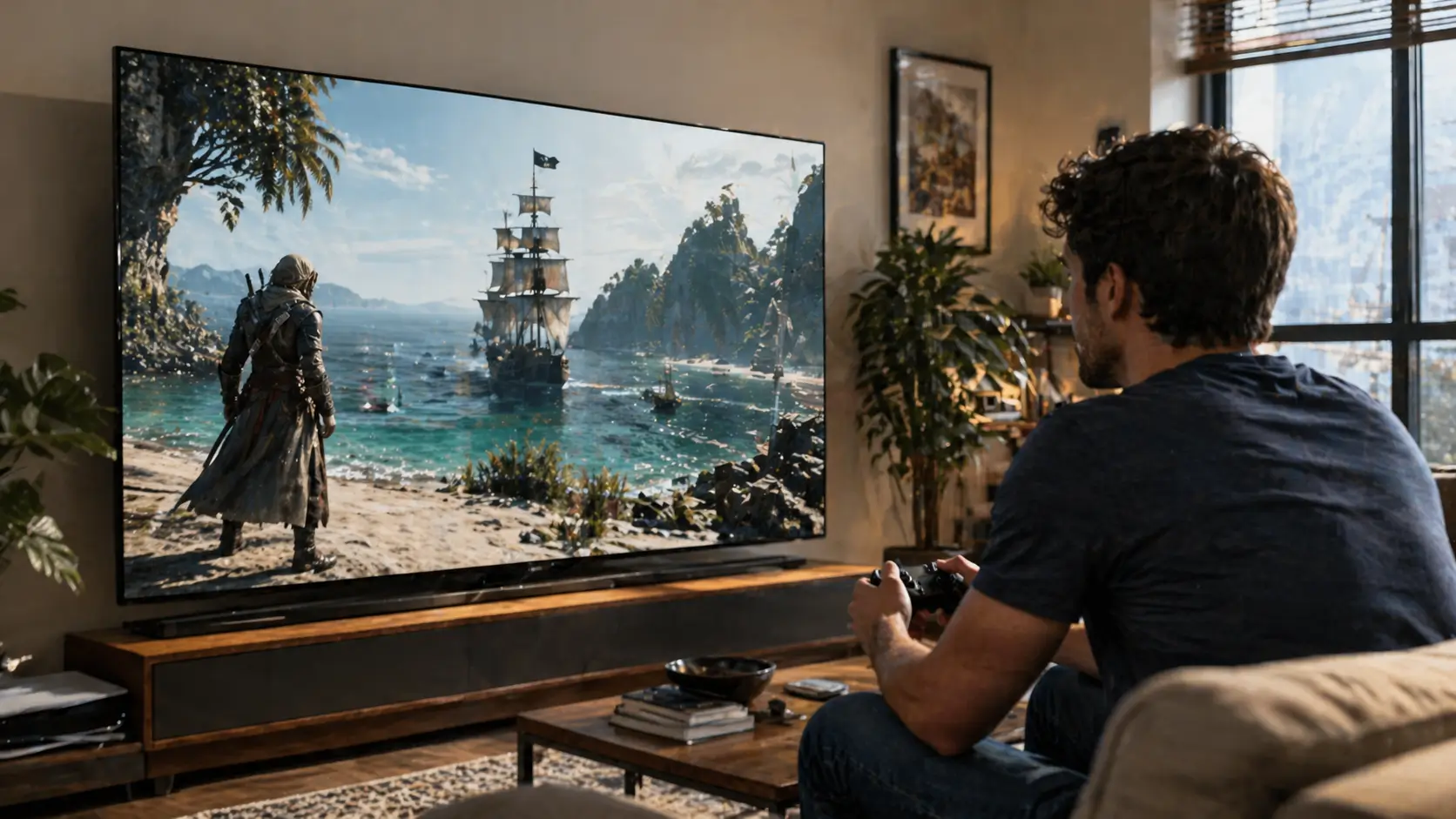
Assassin’s Creed Black Flag Resynced carries high expectations because players no longer accept visual upgrades alone. Fans expect Ubisoft to improve the full experience while preserving the freedom, naval combat, and pirate atmosphere that defined the original.
From a technical standpoint, the most visible upgrades will likely focus on graphics, lighting, animations, and overall world detail. A modern version of the Caribbean should feel more dynamic, with realistic water physics, richer island environments, improved weather systems, and seamless transitions between land and sea. These improvements are not just cosmetic—they directly influence immersion and player engagement.
However, visual quality alone will not determine success. Gameplay systems must evolve as well. Players expect smoother combat flow, more responsive stealth mechanics, smarter enemy behavior, and refined ship controls. The challenge is clear: the Assassin’s Creed Black Flag remake needs to feel modern without losing the simplicity and freedom that made the original experience so accessible.
From a player perspective, responsiveness and control precision matter as much as visual fidelity. If movement feels outdated or combat lacks fluidity, even strong graphics will not be enough to satisfy expectations.
Performance also plays a critical role. Faster loading times, stable frame rates, and full optimization for current-generation hardware are now baseline requirements. Any technical inconsistency at launch could quickly impact player perception and overall reception.
If Ubisoft balances these elements carefully, Assassin’s Creed Black Flag Resynced has the potential to deliver a polished and immersive experience that appeals to both longtime fans and new players. If not, it risks being seen as a missed opportunity in a market where expectations continue to rise.
Industry Context: The Rise of Remakes Like Assassin’s Creed Black Flag Resynced
Assassin’s Creed Black Flag Resynced reflects a broader shift across the gaming industry, where major studios increasingly revisit proven titles instead of relying only on new intellectual properties. For companies like Ubisoft, this approach offers a more controlled way to deliver results in a market where development costs continue to rise and player expectations grow more demanding.
Many classic games still hold strong fan loyalty, but their visuals, mechanics, and technical performance no longer meet modern standards. Remakes address that gap by rebuilding familiar experiences with current technology. When executed properly, they allow publishers to modernize gameplay systems, improve performance, and reintroduce iconic titles to a new generation of players.
From a business perspective, remakes are often seen as lower-risk projects.
Studios are not starting from zero. Instead, they are working with established worlds, recognizable characters, and gameplay systems that have already proven their appeal. This reduces uncertainty while still creating opportunities for strong commercial success.
However, that perceived safety can be misleading. Player expectations around remakes have changed significantly. Audiences now expect meaningful improvements, not just visual upgrades. At the same time, they want developers to preserve the identity and emotional impact of the original experience. Striking that balance has become one of the biggest challenges in modern game development.
For Ubisoft, the Assassin’s Creed Black Flag remake carries particular importance. The company already has a globally recognized franchise, a beloved setting, and a title that many players still consider one of the best in the series. Rebuilding Black Flag for modern hardware gives Ubisoft a chance to strengthen its catalog while reinforcing the core values that made the franchise successful.
At the same time, the margin for error is small. If Assassin’s Creed Black Flag Resynced fails to deliver meaningful improvements or alters key elements of the original experience, it could face strong criticism. But if Ubisoft successfully balances innovation with authenticity, the remake could stand as one of the company’s most effective comeback strategies in a highly competitive market.
Important Note About Assassin’s Creed Black Flag Resynced Development
At this stage, Ubisoft has not shared full details about Assassin’s Creed Black Flag Resynced. Players should treat early information with caution until the company confirms gameplay footage, technical features, supported platforms, release timing, and final improvements.
This caution matters because remake projects often evolve during development. Ubisoft may still refine graphics, combat systems, stealth mechanics, naval gameplay, performance targets, and overall world design before launch. As a result, not every early report or rumor reflects the final product.
From a player perspective, relying on unconfirmed information can lead to unrealistic expectations. The safest approach is to follow official Ubisoft updates, trailers, and announcements. This allows players to separate verified details from speculation and avoid disappointment.
The Assassin’s Creed Black Flag remake carries significant expectations, but expectations alone do not define the final experience. Only confirmed gameplay and technical performance will show whether the project meets modern standards.
For now, Assassin’s Creed Black Flag Resynced remains one of the most important projects to watch. It matters even more for players who want a faithful yet modern return to the world of Edward Kenway and his pirate adventure.
Microsoft recently introduced new gaming accessories alongside Forza Horizon 6, highlighting a bold new design direction worth exploring.
What This Means for Ubisoft
The Assassin’s Creed Black Flag Resynced release could represent more than a standard remake for Ubisoft. It stands as a direct test of trust between the company and its player base. Many fans still consider Assassin’s Creed IV: Black Flag one of the strongest entries in the franchise, largely because it successfully combined open-world exploration, naval combat, memorable characters, and a distinct pirate atmosphere. That legacy raises expectations and leaves little room for error.
From a strategic perspective, Ubisoft has an opportunity to rebuild confidence in its creative direction. However, modern players demand more than visual upgrades. They expect smooth performance, responsive controls, refined gameplay systems, and an experience that preserves the emotional impact of the original. In other words, Assassin’s Creed Black Flag Resynced must feel modern without losing its core identity.
This project also gives Ubisoft a chance to demonstrate that it understands what longtime fans value.
In recent years, players have become increasingly critical of remakes, live-service models, and unfinished launches. Because of that shift, delivering a stable and polished experience from day one is no longer optional—it is expected. A strong release would signal that Ubisoft can still deliver high-quality products while respecting its legacy.
At the same time, the remake plays a role in Ubisoft’s broader position within a highly competitive gaming market. Studios now compete not only on scale but also on technical performance, update frequency, and overall player experience. Nostalgia alone cannot drive success. Ubisoft needs to deliver meaningful improvements, maintain transparent communication, and offer a product that feels complete and worth the investment.
From a player perspective, the outcome will shape how the community views future projects. If Assassin’s Creed Black Flag Resynced succeeds, it could restore confidence and reinforce the strength of the franchise. If it fails to meet expectations, it may deepen skepticism around Ubisoft’s ability to handle its most important titles.
In the end, this remake has the potential to become a turning point. More than revisiting a beloved game, it gives Ubisoft a clear opportunity to prove that quality, respect for its audience, and attention to detail still define its approach to game development.
Looking Ahead: Assassin’s Creed Black Flag Resynced Future
The Assassin’s Creed Black Flag Resynced release could become a defining moment for Ubisoft, but its success will depend on execution rather than nostalgia. A remake of a beloved title must do more than recreate past experiences. Players expect meaningful improvements, including smoother gameplay, stronger performance, modern visuals, and a polished experience from day one.
If Ubisoft delivers on these expectations, Assassin’s Creed Black Flag Resynced could establish a new benchmark for future remakes within the franchise. It would demonstrate that classic titles can return with modern quality while preserving their original identity. However, the challenge lies in balance. Adapting to modern standards without overcomplicating core systems remains essential. Fans still value the freedom, naval combat, pirate atmosphere, and sense of adventure that defined the original experience.
From a strategic perspective, this project could influence how Ubisoft approaches the future of the franchise. Instead of focusing only on new settings and large-scale expansions, the company may adopt a more balanced strategy that includes revisiting its strongest titles. That approach can succeed, but only if Ubisoft maintains transparency and aligns development decisions with player expectations.
At the same time, this remake signals an effort to rebuild trust. Returning to one of the most respected entries in the series shows that Ubisoft understands the importance of its legacy. However, intent alone is not enough. The final product must reflect quality, consistency, and attention to detail.
In the end, Assassin’s Creed Black Flag Resynced represents more than a return to the past. It offers Ubisoft a clear opportunity to prove that it can protect its legacy while building a stronger and more reliable future for the franchise.
For ongoing updates and official announcements, players can follow developments directly on the official Ubisoft website.
Executive Summary
Assassin’s Creed Black Flag Resynced could become a defining remake for Ubisoft. By combining nostalgia with modern visuals and refined gameplay, the project carries strong expectations. If Ubisoft respects the original experience while delivering real improvements, it can rebuild player trust and strengthen the Assassin’s Creed franchise in a competitive market.
