
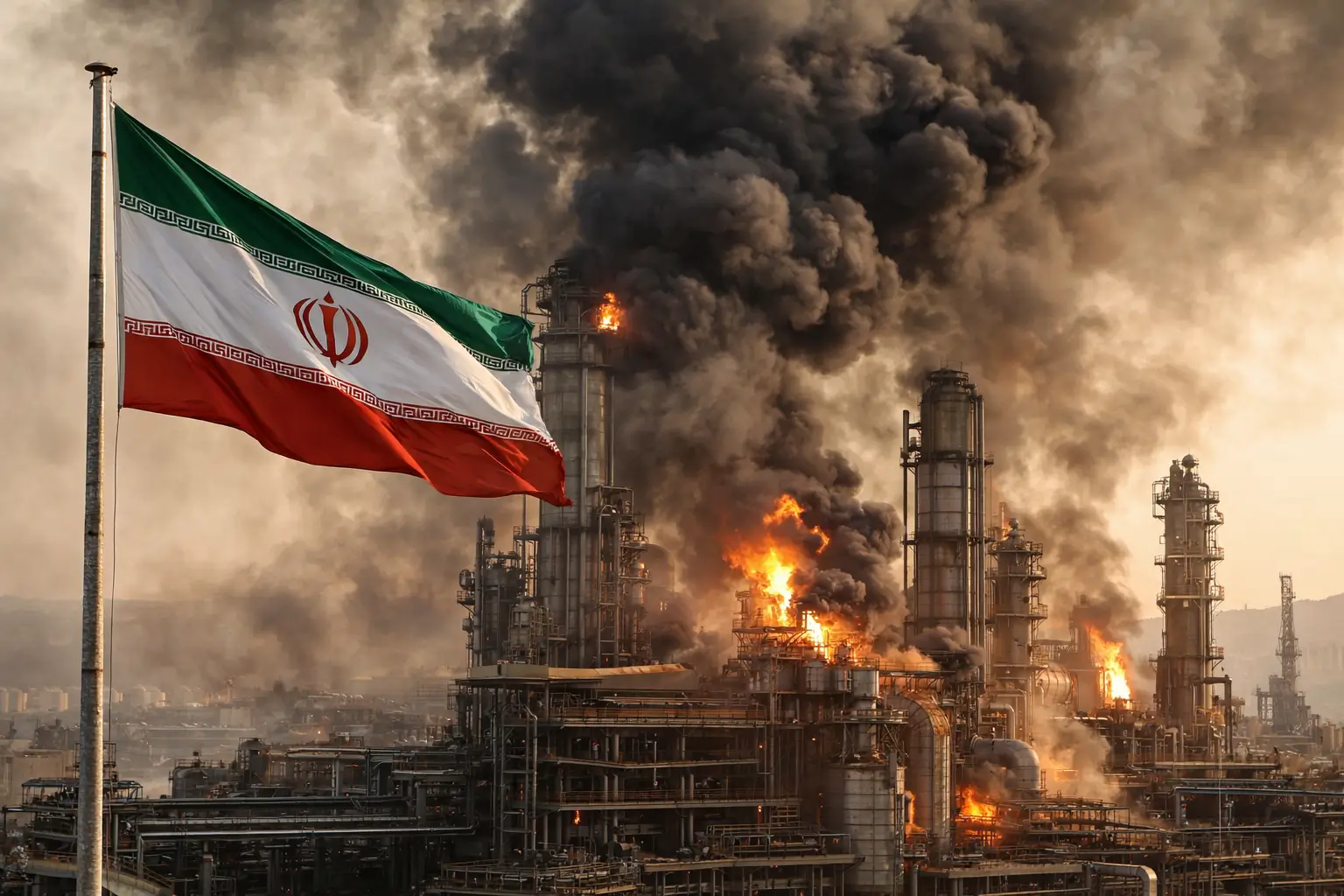

Iran Halts Petrochemical Exports Following Infrastructure Attacks
Iran’s decision to halt petrochemical exports marks a significant shift in the global energy landscape. The Iran petrochemical export suspension comes after a series of infrastructure attacks that damaged key production facilities, forcing authorities to act quickly to stabilise the situation.
While the announcement may appear temporary, its implications already affect markets far beyond the country’s borders.
Initial reports indicate that critical industrial zones, including Asaluyeh and Mahshahr, were among the most affected areas. These hubs are not only central to Iran’s petrochemical industry but also play a vital role in supplying international markets with essential raw materials. When disruptions occur at this scale, the effects ripple through supply chains, impacting industries that depend on consistent and predictable output.
What makes this situation particularly serious is the nature of the infrastructure damage. Petrochemical production relies heavily on interconnected systems—feedstock pipelines, processing units, and export terminals. When one part fails, it often triggers a broader slowdown across multiple facilities. This is exactly what appears to have happened, leading to a wider petrochemical supply disruption in Iran.
In response, authorities have prioritised domestic needs, ensuring that local demand is met while repair efforts continue. This strategic move reflects a broader pattern seen in similar crises, where internal stability becomes the immediate focus. At the same time, the Iran energy export suspension highlights how vulnerable global supply chains can be when key producers face unexpected disruptions.
As the situation develops, markets are closely monitoring both infrastructure recovery and geopolitical signals, as these factors will ultimately determine how long the disruption lasts and how deeply it affects global trade.
Infrastructure Damage Behind Iran Petrochemical Export Suspension
The Iran petrochemical export suspension is closely linked to the scale of damage to critical infrastructure. The attacks did not simply affect isolated facilities—they disrupted the core systems that keep petrochemical production running smoothly. When failures hit utility networks such as power supply, cooling systems, and feedstock pipelines, the entire production chain begins to slow down or even stop completely.
In major industrial hubs, petrochemical plants operate as part of an interconnected system. This means that even a small disruption in one area can quickly spread across multiple facilities. In this case, the damage appears to have affected essential inputs needed to maintain stable operations, leading to a wider shutdown across the sector. As a result, production capacity dropped significantly in a short period of time.
The immediate impacts were both technical and logistical:
- Damage to key petrochemical production hubs
- Interruptions in feedstock supply and processing systems
- Limited access to export terminals and shipping infrastructure
- Increased pressure on transportation and distribution networks
These challenges created a situation where continuing normal export operations was no longer viable. Authorities had to respond quickly to prevent further instability, especially as supply chains became increasingly strained.
From a broader perspective, this disruption highlights how dependent modern industries are on stable infrastructure. Petrochemical production is not just about raw materials—it relies on precise coordination between multiple systems working together. When that coordination breaks down, the effects can be immediate and widespread.
In this context, the export suspension was not just a strategic decision, but a necessary step to manage the situation and allow time for recovery efforts to begin.
Shipping Disruptions Increase Uncertainty After Iran Export Suspension
The Iran petrochemical export suspension is not the only factor affecting markets. At the same time, regional tensions are disrupting key shipping routes, which makes the situation even more complex. In particular, increased military activity has raised serious concerns around major maritime corridors such as the Strait of Hormuz.
As a result, companies are now facing additional challenges beyond supply shortages. First, shipments are taking longer to arrive. Then, transportation costs are rising due to higher risk and limited route availability. In some cases, trade operations are being slowed down significantly, which reduces overall efficiency across the region.
The main impacts can be seen clearly:
- Delays in cargo deliveries
- Higher shipping and insurance costs
- Reduced efficiency in regional trade flows
Because of these disruptions, logistics planning has become more difficult. Companies must now adjust schedules and prepare for unexpected delays. In addition, some shipping operators are choosing safer routes, even if they are longer and more expensive. This decision helps reduce risk, but it also increases operational costs.
Meanwhile, uncertainty continues to grow. Markets react quickly to instability, and even small disruptions can influence pricing and availability. Therefore, businesses are closely monitoring the situation while trying to maintain stable operations.
Overall, shipping disruptions are adding another layer of pressure to global supply chains. Combined with production issues, they highlight how fragile international trade can become during periods of geopolitical tension.
Regional Producers Struggle Amid Iran Petrochemical Supply Disruption
The Iran petrochemical export suspension has created a supply gap that neighbouring producers are struggling to fill. Although some countries in the region have available capacity, ongoing instability is limiting their ability to expand production quickly. As a result, the expected increase in output has not materialised.
First, many producers are dealing with the same regional risks. Therefore, instead of pushing for higher production, they are focusing on maintaining stable operations. In addition, security concerns are influencing key decisions. Companies must protect facilities, workers, and infrastructure, especially in a tense geopolitical environment.
At the same time, scaling production is not immediate. Petrochemical plants require stable conditions, consistent feedstock, and reliable logistics. However, under current circumstances, these elements are not guaranteed. Because of this, producers are taking a cautious approach rather than risking disruptions.
Moreover, uncertainty is shaping long-term strategies. While there is an opportunity to gain market share, companies are avoiding aggressive expansion. Instead, they are prioritising resilience and continuity.
Overall, regional risks limit producers more than any lack of potential.
Consequently, the supply gap remains, and global markets continue to feel the pressure.
Possible Scenarios for Export Recovery
| Scenario | Timeline | Key Factor |
|---|---|---|
| Infrastructure repairs | 6–12 months | Facility restoration |
| Conflict resolution | 3–8 months | Diplomatic progress |
| Economic adjustment | 9–15 months | Revenue recovery |
| Domestic stabilisation | 12–18 months | Internal demand |
In addition, technology is playing a key role in how companies respond to global challenges. AI-driven systems, such as those introduced in Amazon bringing Alexa to the UK with new AI features, show how automation is improving decision-making in real time.
Market Adjustments After Iran Petrochemical Export Suspension
The Iran petrochemical export suspension is forcing both governments and companies to rethink how they manage supply and risk.
As the disruption continues, companies and governments adopt different strategies to reduce immediate pressure while preparing for long-term uncertainty. At first, most organisations focus on short-term stability.
However, deeper structural changes are already beginning to take shape.
To start with, many companies are increasing their reliance on spot markets. This approach allows them to secure materials quickly, even though prices are often higher. At the same time, businesses are exploring alternative suppliers in different regions. As a result, supply chains are becoming more flexible, although also more complex to manage.
In addition, investment in domestic production is gaining attention. Governments, in particular, are encouraging local industries to reduce dependence on external sources. While this shift takes time, it can strengthen long-term resilience. Meanwhile, companies are also renegotiating contracts to include more flexible terms. This helps them respond faster to sudden disruptions.
Key adjustments include:
- Greater use of spot market purchases
- Increased investment in local production capacity
- Diversification of global supply sources
- Renegotiation of supply agreements
Furthermore, these changes reflect a broader shift in mindset. Instead of focusing only on cost efficiency, organisations are now prioritising supply security. Consequently, risk management is becoming a central part of decision-making.
Overall, the current situation is accelerating changes that were already underway. As companies adapt, global supply chains are gradually evolving to become more resilient and less dependent on a single region.
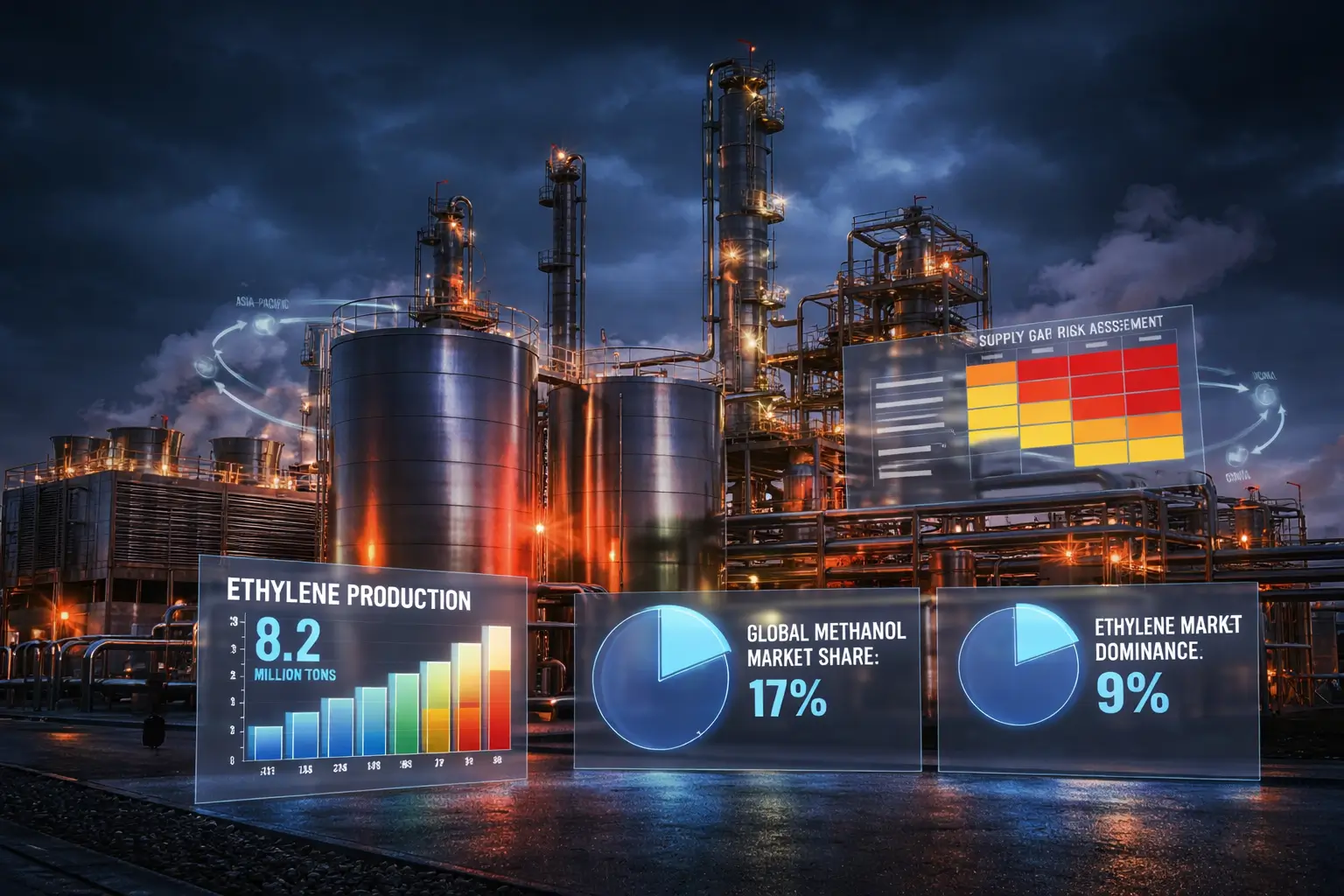
Global petrochemical supply data shows how disruptions in one region can quickly impact industries worldwide.
Executive Summary
Iran’s suspension of petrochemical exports highlights how quickly geopolitical events can disrupt global supply chains. What began as a regional infrastructure issue is now influencing international markets and industrial operations.
As the situation evolves, the response from governments, companies, and global markets will shape the next phase of the petrochemical industry.
