
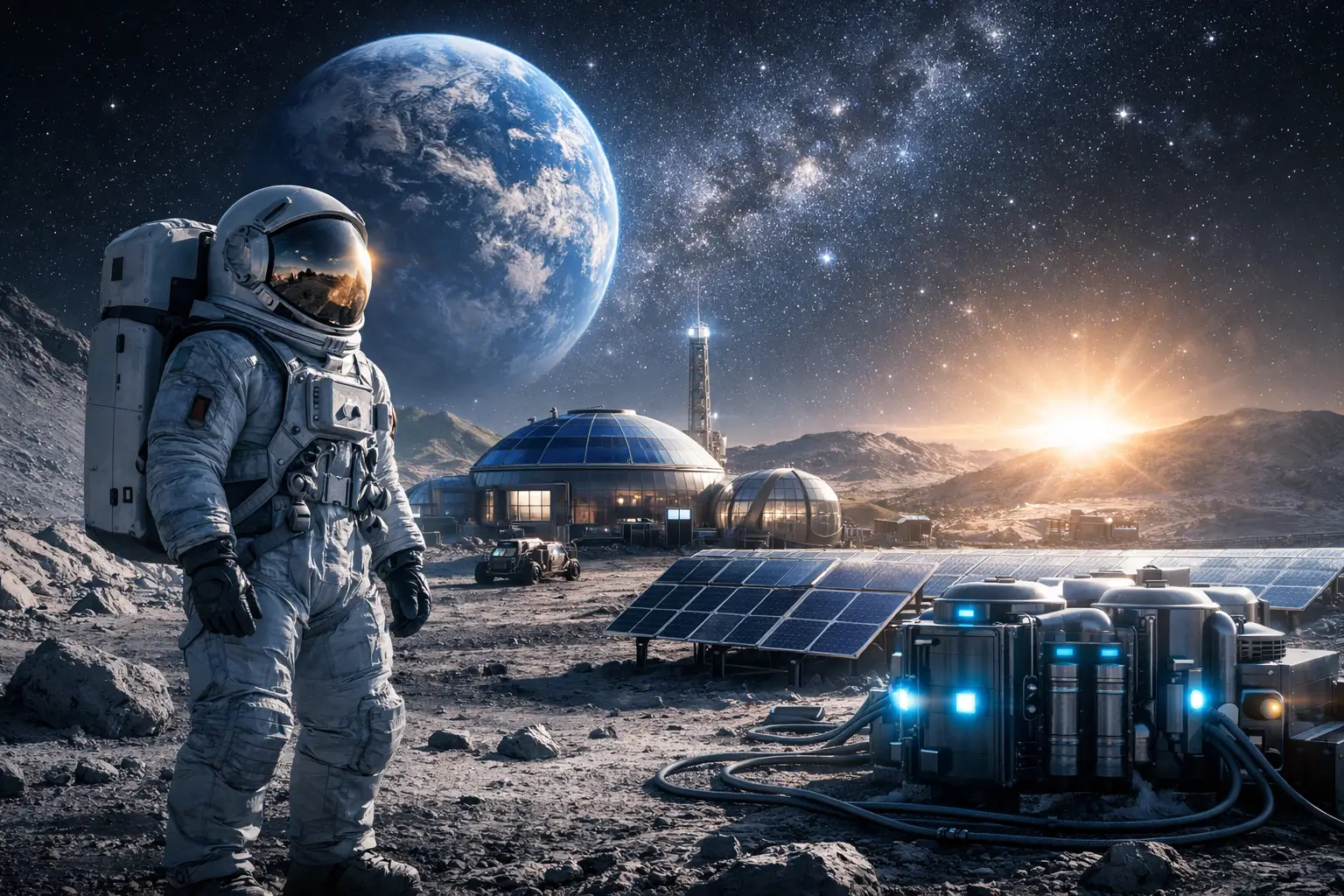

Space exploration is entering a bold new era—and surprisingly, one of the most critical elements behind this revolution comes from right here on Earth: platinum. What was once seen mainly as a luxury metal is now at the heart of some of the most advanced technologies ever created. Today, platinum fuel cell technology is helping redefine how we power missions beyond our planet.
As missions like NASA’s Artemis program prepare to return humans to the Moon, the need for reliable and efficient energy systems becomes impossible to ignore. Space is unforgiving. There are no quick repairs, no second chances, and no room for failure. That’s exactly why platinum fuel cell technology is gaining so much attention—it offers a level of performance and reliability that traditional systems simply cannot match.
At the center of this innovation are hydrogen fuel cells powered by platinum-based catalysts. These systems are not only lightweight and efficient, but they are also capable of generating clean energy in extreme conditions. For long-duration missions, especially those targeting the Moon and eventually Mars, this kind of technology is no longer optional—it’s essential.
But what exactly makes platinum fuel cell technology so powerful? And why are space agencies investing heavily in it as a long-term solution?
Let’s break it down in a simple and practical way.
According to recent industry insights, platinum-based energy systems are expected to play a major role in future space missions.
Why Platinum Fuel Cell Technology Is Important for Space Missions
Platinum is far more than a precious metal used in jewelry. In today’s world, it has become one of the most valuable materials in advanced engineering, especially in systems that need to perform under extreme pressure. That is exactly why platinum fuel cell technology is receiving so much attention in the space sector.
Space missions demand equipment that is efficient, durable, and dependable over long periods. On Earth, a machine can often be repaired or replaced when something goes wrong. In space, that is rarely possible. Every component must work exactly as expected, often in freezing temperatures, intense radiation, and environments where maintenance is nearly impossible. This is where platinum becomes so important.
Platinum fuel cell technology is used in hydrogen fuel cells, electrolysis systems, and proton exchange membrane, or PEM, technology. These systems depend on platinum because it acts as an exceptionally effective catalyst. In simple terms, platinum helps speed up essential chemical reactions without being consumed in the process. That makes the system more efficient and more reliable, which is critical for long-duration missions.
Another reason platinum matters is its durability. It can withstand harsh operating conditions while continuing to perform at a very high level. This makes platinum fuel cell technology especially valuable for missions to the Moon and, in the future, Mars, where energy systems must function without failure for extended periods.
Countries such as South Africa, which hold the world’s largest platinum reserves, therefore play a strategic role in the future of clean energy and space innovation. As global interest in hydrogen power grows, platinum fuel cell technology is becoming more than a technical solution—it is becoming a key part of humanity’s next steps beyond Earth.

Artemis Missions and the Role of Platinum Fuel Cell Technology
The Artemis missions represent more than a simple return to the Moon. They mark the beginning of a long-term human presence beyond Earth. With Artemis II, astronauts will travel around the Moon, testing critical systems and preparing for future landings. This mission is a major step forward, but it also brings new technical challenges.
Unlike the Apollo era, Artemis is not just about visiting the Moon. The goal now is to stay and build a sustainable presence.
Exploring the Lunar South Pole
Future missions will focus on the Moon’s south pole. Scientists believe this region contains water ice, which could support life and fuel production. This makes it one of the most important targets for exploration.
At the same time, space agencies are developing sustainable habitats. These systems must support long-term missions and prepare for future journeys to Mars. Every decision now shapes the future of human space exploration.
The Energy Challenge on the Moon
Reliable energy is essential for all of this to work. Lunar conditions are harsh and unpredictable. Astronauts will face extreme cold, isolation, and long periods without sunlight.
This is where platinum fuel cell technology becomes critical. It provides a stable and efficient energy source in environments where traditional systems struggle.
Why Energy Storage Is Critical
One of the biggest challenges is the lunar night, which can last up to two weeks. During this time, solar panels stop producing energy. As a result, missions depend on stored energy to survive.
Traditional batteries alone cannot handle this demand. They lack the capacity and reliability needed for long-duration missions. In contrast, systems based on platinum fuel cell technology can store energy efficiently and deliver it when needed.
In this environment, energy is not just a technical detail—it is the foundation of survival. Without reliable power, communication systems fail, habitats become unsafe, and missions are at risk. That is why platinum fuel cell technology is becoming central to the success of Artemis and the future of human space exploration.
How Hydrogen Fuel Cells Work in Space Energy Systems
Hydrogen fuel cells have supported space exploration since the Apollo missions. Today, they play an even bigger role as missions become longer and more complex. In simple terms, a fuel cell converts chemical energy into electricity. This makes it highly valuable for space missions, where efficiency and reliability are essential.
Fuel cells produce power quietly and with very low emissions. That makes them ideal for controlled environments like spacecraft and lunar habitats. More importantly, they can operate consistently under extreme conditions, where other systems may fail.
Energy Generation During Lunar Day and Night
On the Moon, energy conditions are very different from those on Earth. During lunar daylight, solar panels capture energy from the Sun. Engineers then use this energy for electrolysis, a process that splits water into hydrogen and oxygen. Instead of releasing these gases, the system stores them for later use.
When the Moon enters its long night—lasting up to 14 Earth days—sunlight disappears. At that point, the system feeds the stored hydrogen and oxygen back into the fuel cell. Inside the system, they recombine through an electrochemical reaction that generates electricity. This process also produces water, which can be reused. As a result, the system creates a closed-loop energy cycle.
Why Platinum Fuel Cell Technology Matters
This is where platinum fuel cell technology becomes essential. Platinum acts as a catalyst inside fuel cells, helping chemical reactions occur faster and more efficiently. It also ensures stable performance under harsh conditions.
Because of this, platinum fuel cell technology supports cleaner and more reliable energy systems than many traditional alternatives. For lunar missions, this is critical. Astronauts depend on stable power for life support, communication, and equipment.
In this environment, platinum fuel cell technology is not just useful—it is a practical solution for long-term survival and mission success.
Regenerative Fuel Cells (RFC) in Platinum Fuel Cell Technology
One of the most promising innovations for future space missions is the Regenerative Fuel Cell (RFC). At first glance, it may sound highly technical, but the basic idea is actually simple. You can think of an RFC as a much more advanced version of a rechargeable battery—one designed for environments where ordinary batteries are simply not enough.
An RFC combines several key parts into one integrated system: a fuel cell, an electrolyzer, a fluid processing system, and a gas storage system. Together, these components allow the system to both store energy and generate electricity when needed. During periods when energy is available, such as lunar daylight, the electrolyzer uses electricity to split water into hydrogen and oxygen. Those gases are then stored. Later, when energy is needed, the fuel cell recombines them to produce electricity and water again.
This cycle is what makes RFCs so important. Unlike traditional batteries, which store a fixed amount of energy and gradually lose effectiveness, RFCs can support much larger energy demands over longer periods. That advantage becomes especially important in lunar missions, where astronauts may need dependable power for many days without sunlight.
Another major benefit is weight. In space exploration, every kilogram matters. Launching heavy equipment is expensive and difficult, so lighter systems are always preferred. RFCs offer a strong balance between energy capacity and mass, making them more practical than many conventional alternatives. This is one reason platinum fuel cell technology is receiving so much attention. Because platinum supports efficient fuel cell performance, platinum fuel cell technology helps make RFC systems more reliable for long-duration missions.
For environments like the Moon, where energy storage can determine mission success or failure, RFCs are not just impressive—they are essential.
Why Lithium Batteries Are Not Enough for Space Energy Systems
Lithium-ion batteries work well in everyday applications on Earth. They power smartphones, electric vehicles, and many portable devices. They are reliable, widely available, and efficient under normal conditions. However, space is not a normal environment. What works on Earth does not always work on the Moon.
In space, energy systems must operate without failure. There is no room for quick repairs or replacements. This makes battery limitations much more serious.
Limitations of Lithium Batteries in Space
One of the main challenges is weight. Every kilogram matters in space missions. Heavier systems increase launch costs and reduce overall efficiency. Lithium batteries can also store only a limited amount of energy compared to what long-duration missions require.
Another issue is performance over time. The Moon’s long nights can last up to two weeks without sunlight. During this period, energy demand remains high, but batteries alone cannot provide enough power to sustain operations.
Extreme Conditions on the Moon
The Moon’s south pole presents even greater challenges. Astronauts will face extreme cold, long periods of darkness, and constant energy needs. Systems must support life support, communication, mobility, and scientific equipment at all times.
In these conditions, energy systems must be both reliable and flexible. Batteries alone struggle to meet these requirements.
Why Fuel Cells Are the Better Solution
Because of these limitations, space agencies are exploring better alternatives. Fuel cells offer a more practical solution for long-term missions. They can store energy more efficiently and deliver power when solar energy is not available.
This is where platinum fuel cell technology becomes essential. It improves efficiency, durability, and system stability under extreme conditions. As a result, platinum fuel cell technology provides a more reliable energy solution for lunar missions.
For future exploration, it is not just an improvement—it may be the key to maintaining a sustainable human presence on the Moon.
The Role of Platinum in Fuel Cell Technology and Extreme Conditions
Platinum plays a critical role in modern space technology. It performs reliably in conditions where many other materials fail. In proton exchange membrane (PEM) systems, platinum-based catalysts drive the chemical reactions that generate electricity. In simple terms, platinum helps these systems work efficiently and consistently when reliability matters most.
Performance Under Harsh Space Conditions
Space is one of the most extreme environments imaginable. Equipment must operate under constant stress, including rapid temperature changes, radiation exposure, and vacuum conditions. In addition, systems must function for long periods without maintenance.
Under these conditions, materials that corrode easily or degrade quickly cannot be used. Platinum stands out because it resists corrosion and maintains performance over time. This makes it highly suitable for long-duration missions.
Why Platinum Fuel Cell Technology Is Essential
This is why platinum fuel cell technology plays such an important role in future space missions. The catalyst must continue working even in harsh environments, where repairs are not possible. Systems must remain stable and efficient at all times.
Because of its durability and efficiency, platinum fuel cell technology provides a dependable solution for energy generation in space. It ensures that critical systems continue to operate without interruption.
A Mission-Critical Requirement
In space missions, energy supports life support systems, communication, and habitat operations. Any failure can create serious risks for astronauts and mission success.
For this reason, platinum is not just a useful material—it is essential. Platinum fuel cell technology provides the reliability needed to support long-term exploration, making it a key component in the future of space travel.
As missions like the NASA Artemis program continue to evolve, space agencies are preparing for long-term lunar exploration.
Hydrogen Energy and the Growth of Platinum Fuel Cell Technology
Executive Summary
Platinum fuel cell technology is playing a central role in the future of space exploration. As missions become more ambitious, reliable and efficient energy systems are essential for long-term success.
From supporting lunar exploration to advancing clean energy solutions on Earth, this technology is shaping both scientific progress and global energy strategies. As interest in hydrogen and sustainable systems continues to grow, platinum fuel cell technology is expected to remain a key part of this transformation.
