
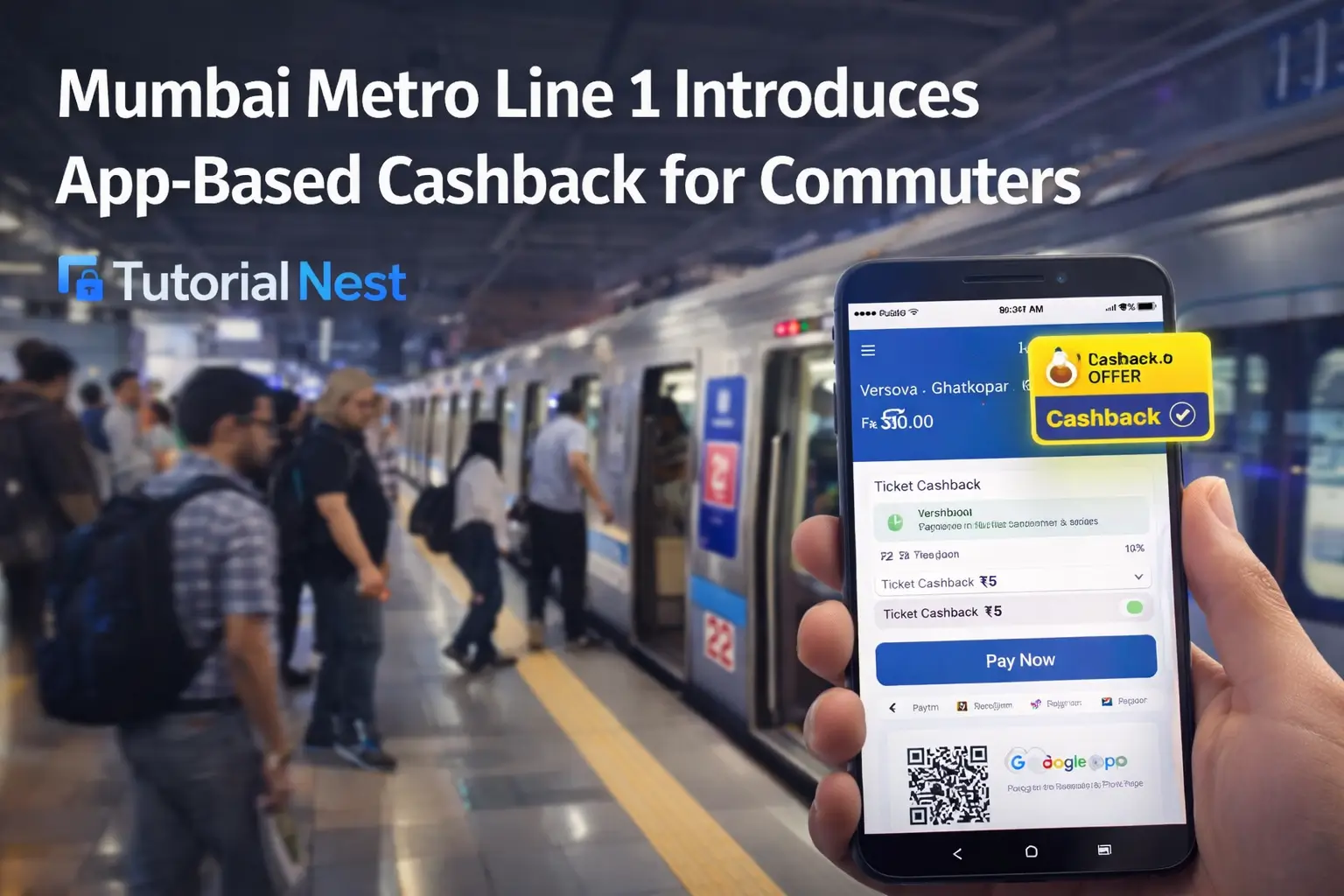

In a significant move toward enhancing commuter convenience and promoting digital adoption, Mumbai Metro Line 1 has introduced a new app-based cashback system. This initiative aims to encourage passengers to shift from traditional ticketing methods to digital payments, offering financial incentives while improving overall efficiency.
As urban transportation systems continue to evolve globally, Mumbai’s metro network is taking a progressive step by integrating smart payment solutions that benefit both commuters and operators.
Understanding Mumbai Metro Line 1

The line connects Versova to Ghatkopar, covering one of the most heavily trafficked corridors in Mumbai. This route links important residential neighborhoods with major commercial and business districts, making it highly valuable for both daily commuters and occasional travelers. Since its launch, Mumbai Metro Line 1 has significantly transformed how people move across the city, offering a faster and more predictable alternative to road transport.
One of the main reasons for its popularity is its ability to bypass traffic congestion, which is a common issue in Mumbai. Commuters who previously spent hours stuck in traffic can now complete the same journey in a fraction of the time. This efficiency has made the metro an essential part of daily life for professionals, students, and tourists alike.
Key Features:
- Covers a distance of approximately 11.4 km
- Connects major residential and commercial hubs
- Significantly reduces travel time across the city
- Helps decongest road traffic and lower pollution levels
In addition to its practical benefits, Mumbai Metro Line 1 also supports a more sustainable urban environment. By encouraging people to shift from private vehicles to public transport, it contributes to reduced carbon emissions and improved air quality.
Furthermore, the system continues to evolve with modern technology. The introduction of app-based cashback is a clear example of how Mumbai Metro is embracing digital transformation. This initiative is expected to further streamline commuting by reducing reliance on physical tickets and encouraging the use of digital payment systems.
Overall, Mumbai Metro Line 1 is not just a transportation system—it is a vital part of the city’s infrastructure, helping shape a smarter, faster, and more connected urban experience for millions of people.
What Is the App-Based Cashback Program?
Why Mumbai Metro Introduced Cashback
There are several strategic reasons behind Mumbai Metro Line 1’s decision to introduce an app-based cashback program. This initiative is not just about offering financial rewards—it reflects a broader vision to modernize public transportation, improve efficiency, and align with the rapidly evolving digital economy in India.
1. Promote Digital Payments
India has experienced a massive surge in digital payment adoption over the past few years, driven by platforms like UPI, mobile wallets, and online banking. By introducing cashback incentives, Mumbai Metro aims to accelerate this transition even further. Financial rewards act as a strong motivator, encouraging commuters who still rely on cash to switch to digital alternatives.
This shift benefits both users and operators. For commuters, digital payments are faster, more secure, and easier to manage. For the metro system, it reduces the complexity of handling physical cash, minimizes errors, and enhances transaction transparency. Ultimately, promoting cashless payments supports India’s broader goal of building a digitally empowered economy.
2. Reduce Queues and Congestion
One of the most common challenges in busy metro systems is long queues at ticket counters, especially during peak hours. These queues not only slow down passenger movement but also create congestion in station areas.
By encouraging commuters to book tickets through a mobile app, the cashback program helps significantly reduce reliance on physical ticket counters. Passengers can purchase tickets in advance or on the go, allowing them to move directly to entry gates without waiting in line. This leads to smoother passenger flow, reduced crowding, and a more organized commuting experience.
3. Improve Operational Efficiency
From an operational standpoint, digital ticketing offers numerous advantages. Transactions processed through mobile apps are faster and automatically recorded, making them easier to monitor and analyze. This allows metro authorities to gain valuable insights into commuter behavior, peak usage times, and payment trends.
Additionally, reducing the use of cash lowers administrative overhead. There is less need for staff to manage ticket sales, handle cash, and perform manual reconciliations. Over time, this can lead to cost savings and more efficient resource allocation. The system becomes more streamlined, reliable, and scalable as the number of users grows.
4. Enhance User Experience
At the heart of this initiative is the goal of improving the overall commuter experience. Modern passengers expect convenience, speed, and flexibility, and the cashback program delivers on all three.
Commuters benefit from:
- Faster ticket booking through a user-friendly mobile interface
- No need to carry cash or worry about exact change
- Seamless and contactless entry into metro stations
- Rewards and cashback for regular usage
These improvements make daily travel less stressful and more rewarding. Over time, such enhancements can increase user satisfaction and encourage more people to choose metro travel over other modes of transportation.
In summary, the introduction of cashback is a well-thought-out move that combines financial incentives with technological advancement. It supports digital adoption, reduces congestion, improves efficiency, and enhances the commuter experience—making it a win-win solution for both passengers and the metro system.
Benefits for Commuters

Benefits for Commuters
App-based payments make metro travel faster, more convenient, and rewarding for daily users. With the introduction of the cashback program on Mumbai Metro Line 1, commuters now enjoy not only a smoother travel experience but also tangible financial and practical benefits. This initiative is designed to improve everyday commuting while encouraging a shift toward digital solutions.
The cashback system brings several real-world advantages that directly impact how passengers interact with the metro on a daily basis. From saving money to reducing travel stress, the benefits are both immediate and long-term.
Financial Savings
One of the most appealing aspects of the cashback program is the opportunity for regular commuters to save money. Although individual cashback amounts may seem small, they can accumulate significantly over time—especially for those who use the metro daily.
Frequent travelers can benefit from:
- Reduced effective travel costs
- Ongoing promotional offers and bonuses
- Cashback that can be reused for future journeys
Over weeks and months, these savings can make a noticeable difference, particularly for students, office workers, and others who rely heavily on public transport.
Convenience
Convenience is another major advantage of app-based ticketing. Instead of standing in long queues at ticket counters, commuters can purchase tickets directly from their smartphones in just a few seconds.
This means:
- No waiting during peak hours
- No need to carry cash or search for change
- Easy access to tickets anytime, anywhere
The entire process becomes seamless, allowing users to focus more on their journey rather than the logistics of buying tickets.
Faster Boarding
Digital tickets significantly speed up the boarding process. Once a ticket is purchased through the app, it can be scanned quickly at automated entry gates.
This results in:
- Reduced waiting time at station entrances
- Smoother passenger flow during rush hours
- Less congestion around ticketing areas
For a busy city like Mumbai, where every minute counts, faster boarding can greatly improve the daily commute.
Contactless Experience
In today’s world, hygiene and safety are more important than ever. App-based payments offer a completely contactless solution, minimizing physical interaction at ticket counters and reducing the handling of cash.
This provides:
- A safer travel environment
- Lower risk of contamination
- Greater peace of mind for commuters
The contactless nature of digital ticketing aligns with global trends in public transport systems, where safety and efficiency go hand in hand.
Overall Impact
Beyond individual benefits, the cashback initiative contributes to a more modern and efficient commuting ecosystem. By combining financial incentives with digital convenience, Mumbai Metro Line 1 is enhancing the overall passenger experience in a meaningful way.
Commuters not only travel faster and more comfortably but also feel rewarded for adopting smarter, more efficient ways of commuting. As more users embrace this system, the benefits will continue to grow, making metro travel in Mumbai even more accessible, efficient, and user-friendly.
Supported Payment Methods
The app-based cashback system introduced by Mumbai Metro Line 1 supports a wide range of payment options, ensuring that commuters can choose the method that best suits their preferences and convenience. This flexibility is a key factor in encouraging widespread adoption of digital ticketing across different user groups.
Passengers can make payments using UPI (Unified Payments Interface), which has become one of the most popular and widely used digital payment methods in India due to its speed and simplicity. In addition, the system supports mobile wallets such as Paytm and PhonePe, allowing users to pay quickly without needing to enter bank details each time.
For those who prefer traditional banking methods, debit and credit cards are also accepted, offering a familiar and secure way to complete transactions. Furthermore, net banking is available for users who prefer direct payments through their bank accounts.
This variety of options ensures that both tech-savvy users and those transitioning to digital payments can easily access the system. By accommodating multiple payment methods, Mumbai Metro Line 1 makes digital ticketing more inclusive, convenient, and adaptable to the needs of a diverse commuter base.
Security and Data Protection
Security remains a top priority for any digital payment system, and Mumbai Metro Line 1’s app-based cashback initiative is no exception. As more commuters shift toward mobile ticketing and cashless transactions, ensuring the safety of user data and financial information becomes essential for building trust and encouraging adoption.
To protect users, the system incorporates several advanced security measures designed to safeguard transactions and personal data. These include encrypted transactions, which ensure that sensitive information such as payment details is securely transmitted and cannot be intercepted by unauthorized parties. In addition, the platform uses secure authentication methods, such as OTP (one-time password) verification and device-level security checks, to confirm user identity before processing payments.
The system also adheres to financial and data protection regulations, ensuring compliance with industry standards and government guidelines. This helps maintain transparency and accountability while minimizing the risk of fraud or data breaches.
Measures in Place:
- Encrypted transactions for secure data transfer
- Secure authentication processes
- Compliance with financial and data protection regulations
While these protections are robust, users also play an important role in maintaining their own security. To ensure a safe experience, commuters are advised to follow best practices such as:
- Using only the official metro application
- Avoiding public or unsecured Wi-Fi networks when making transactions
- Enabling built-in app security features, such as PINs or biometric locks
By combining strong system-level protections with responsible user behavior, the Mumbai Metro cashback platform provides a safe, reliable, and secure digital commuting experience.
Impact on Urban Transportation
The introduction of app-based cashback on Mumbai Metro Line 1 is more than just a promotional feature—it represents a broader shift toward smart urban mobility. By integrating digital payments with financial incentives, the metro system is actively encouraging a more efficient, technology-driven approach to public transportation.
One of the most immediate impacts is the increase in digital adoption. As more commuters switch to mobile ticketing, the reliance on cash transactions and physical ticket counters is significantly reduced. This transition not only benefits users but also simplifies backend operations for metro authorities.
Another key outcome is the reduction in operational costs. Digital systems minimize the need for manual processes, cash handling, and physical infrastructure, leading to long-term savings and improved efficiency.
Additionally, the system contributes to better passenger flow management. With fewer queues and faster ticket validation, stations become less congested, especially during peak hours. This creates a smoother and more organized commuting experience.
Perhaps most importantly, digital ticketing enables data-driven transport planning. Authorities can analyze usage patterns, peak travel times, and commuter behavior to make informed decisions about scheduling, capacity, and future expansions.
By embracing such innovations, Mumbai is aligning itself with global smart city standards and setting a strong example for modern, sustainable urban transport systems.
Comparison with Global Metro Systems
Many cities worldwide are adopting similar strategies:
- London offers contactless fare caps
- Singapore promotes digital ticketing via apps
- New York integrates mobile payments in transit
Mumbai’s cashback initiative adds a unique incentive layer, making it highly attractive.
Future of Cashback and Digital Transit
This move could pave the way for:
- Loyalty programs for commuters
- Integration with other transport systems
- Personalized offers based on travel patterns
- Expansion to other metro lines
The future of commuting is clearly digital, and cashback is just the beginning.

Challenges and Considerations
While the app-based cashback initiative introduced by Mumbai Metro Line 1 is highly promising, it is not without its challenges. As with any digital transformation in public services, there are several factors that need to be addressed to ensure smooth implementation and widespread adoption.
Digital Divide
One of the primary challenges is the digital divide. Not all commuters have access to smartphones, stable internet connections, or digital payment methods. While urban areas like Mumbai have seen rapid digital growth, there is still a segment of the population that relies on traditional ticketing systems.
This creates a gap between users who can benefit from cashback rewards and those who cannot. To ensure inclusivity, metro authorities may need to continue supporting offline ticketing options while gradually encouraging digital adoption through education and incentives.
Technical Issues
Another important consideration is the possibility of technical issues. Like any mobile application, the metro app may occasionally experience glitches, slow performance, or payment failures. During peak hours, when thousands of users are accessing the system simultaneously, these issues can become more noticeable.
Such disruptions can lead to frustration among commuters, especially if transactions fail or cashback is not credited as expected. To maintain user trust, it is essential for the system to be reliable, well-maintained, and supported by responsive customer service.
Awareness and User Education
Awareness is also a critical factor in the success of the initiative. Many commuters may not be fully aware of how the cashback system works or how to use the app effectively. Without proper guidance, users may miss out on benefits or face difficulties navigating the platform.
To address this, metro authorities can invest in:
- Clear in-app instructions
- Station announcements and signage
- Digital campaigns and tutorials
- As digital transport systems evolve, similar innovations are also transforming other platforms. For example, Apple Maps to Introduce Paid Ads This Summer is reshaping how location-based services generate revenue and improve user experience.
Overall Consideration
Despite these challenges, the initiative has strong potential to succeed if these issues are carefully managed. By improving accessibility, ensuring technical reliability, and educating users, Mumbai Metro Line 1 can create a more inclusive and efficient digital ecosystem.
In the long term, addressing these considerations will be key to maximizing the benefits of the cashback program and ensuring that it serves all commuters effectively.
Tips for Commuters
To make the most of the app-based cashback program introduced by Mumbai Metro Line 1, commuters should follow a few simple but effective tips. These steps can help maximize savings, ensure smooth transactions, and enhance the overall travel experience.
First, it is essential to download the official metro app from a trusted source such as the Google Play Store or Apple App Store. Using the official application ensures access to the latest features, accurate information, and secure payment options.
Next, commuters should link their preferred payment method, whether it is UPI, a mobile wallet, or a debit or credit card. Having a payment method set up in advance allows for faster ticket booking and reduces delays during busy travel hours.
It is also important to check for ongoing cashback offers within the app. Promotions may vary based on time, usage, or partnerships with payment providers, so staying informed can help users take full advantage of available rewards.
Finally, users should keep their app updated to ensure optimal performance and access to new features or improvements. Regular updates often include bug fixes, enhanced security, and better user experience.
By following these simple tips, commuters can enjoy a more convenient, efficient, and rewarding metro travel experience.
India’s rapid growth in digital payments is largely driven by systems like UPI. More details can be found on the NPCI official website.
Executive Summary
The introduction of app-based cashback on Mumbai Metro Line 1 marks a major step toward modernizing public transportation. By combining convenience, savings, and digital innovation, the metro system is creating a better experience for commuters while setting an example for other cities.
As technology continues to reshape urban mobility, initiatives like this will play a crucial role in building smarter, more efficient cities.
