
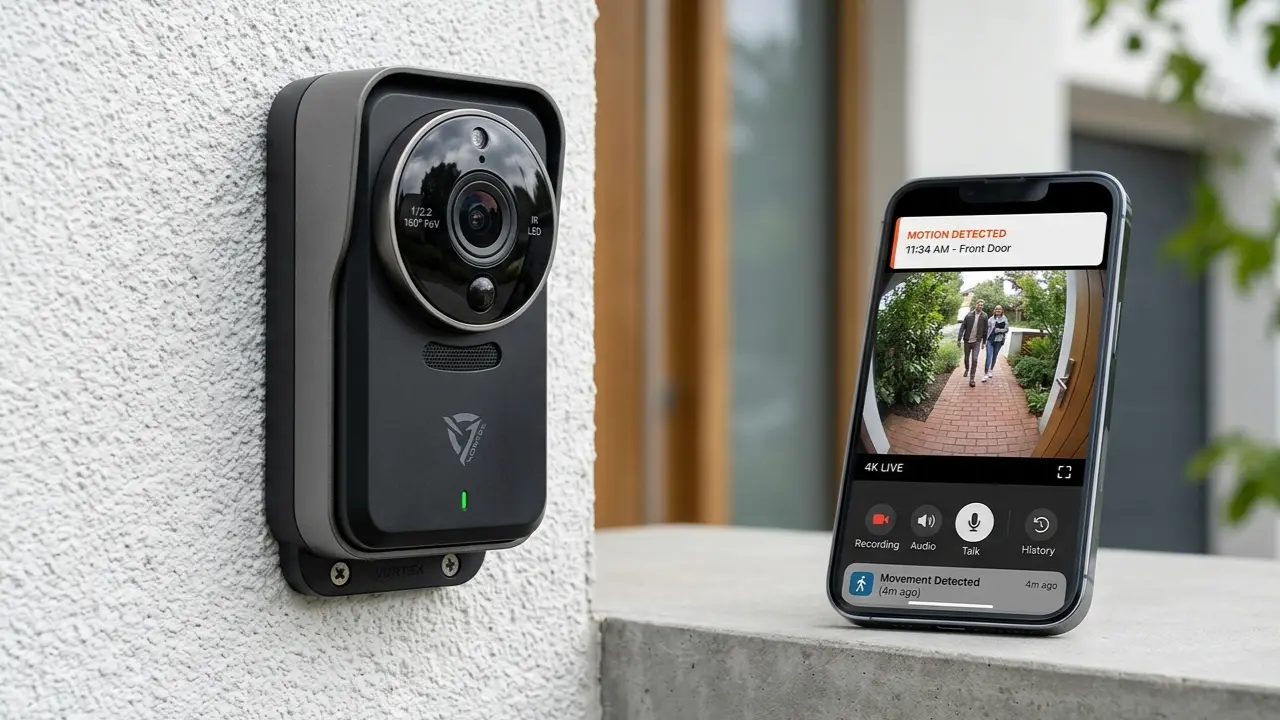

Battery-powered doorbells have always had one major limitation: image quality. That limitation is now starting to disappear as Ring 4K battery doorbells push wireless home security into a more serious category. For years, many users accepted lower video quality because battery-powered devices were easier to install. They avoided wiring, worked in more locations, and gave homeowners flexibility. The trade-off was clear: convenience often came with softer footage, weaker detail, and less useful zoom.
Ring’s move to bring 4K video into battery-powered doorbells changes that balance. It shows how fast smart home technology is improving, especially as hardware, battery efficiency, video compression, and AI detection become more advanced. What once required a wired setup and constant power is now becoming possible in a wireless device that many people can install without professional help.
This matters because security footage only has real value when users can understand what they are seeing. A blurry image may show that someone came to the door, but sharper video can help identify a face, read package details, or notice movement near an entryway. That difference matters in real situations, not just on a spec sheet.
Wireless devices are catching up, and that is the bigger story. Ring is not only improving resolution. It is helping close the gap between flexible battery-powered security and higher-performance wired systems.
What Changes With Ring 4K Battery Doorbells in Real Use
This is not just a spec upgrade. It changes how people use home security cameras in real life. The biggest advantage of Ring 4K battery doorbells is not that the number sounds impressive. The real advantage is the extra detail users can actually use when something happens at the door.
With 4K resolution, homeowners can see facial details more clearly, identify packages with better accuracy, zoom into recorded footage with less quality loss, and track movement around the entrance with more precision. That matters when a visitor stands far from the camera, a delivery gets left near the edge of the frame, or movement happens quickly at night.
Compared to 1080p, 4K gives the image more usable information. A 1080p clip may show that someone approached the door, but it can become soft when users zoom in. A sharper 4K image gives users a better chance to understand who was there, what they carried, and what happened.
That does not mean 4K solves every problem. Lighting, camera angle, Wi-Fi strength, and motion settings still matter. But in real-world security situations, more detail can make the footage more useful, especially when users need clear evidence instead of just a general view.
Real-World Experience (What Users Will Notice)
In real-world conditions, higher resolution improves more than just image quality. With Ring 4K battery doorbells, users notice practical differences the moment they review footage instead of just reading specs. Low-light scenes become easier to interpret because finer details stay visible instead of blending into shadows. Motion footage looks clearer, which helps users follow movement across the frame without losing track of what actually happened.
Zooming into recordings becomes useful rather than frustrating. Instead of seeing blurred pixels, users can isolate faces, packages, or small objects with more confidence. Identifying people at the door also becomes more reliable, especially when someone stands slightly away from the camera or moves quickly.
That said, resolution does not fix everything. Lighting still plays a major role. A poorly lit entryway can reduce the benefits of 4K. Camera angle also matters, since positioning affects what the device captures. Internet connection quality can influence how smoothly footage loads and streams.
The honest takeaway is simple: 4K does not guarantee perfect results, but it raises the baseline. It gives users a better chance to understand what they are seeing when it matters most.
Ring 4K Battery Doorbells Pros and Cons in Real Us
Upgrading to 4K improves what users can see, but it also changes how the device behaves in daily use. With Ring 4K battery doorbells, the gains are clear, but so are the trade-offs. This is not a free upgrade in practical terms.
✅ Pros
- sharper video quality that captures finer details
- better identification of faces, packages, and movement
- improved zoom that remains usable instead of pixelated
- performance that starts to approach wired systems
❌ Cons
- higher battery usage due to increased processing
- more data consumption, especially with frequent recordings
- larger storage needs for video files
- stronger and more stable Wi-Fi required for smooth streaming
This balance matters more than marketing suggests. Users gain better clarity and more useful footage, but they must manage battery cycles, storage limits, and network performance more carefully. In real use, people who optimize motion settings and recording preferences will get the best results. Those who leave everything at maximum settings may notice faster battery drain and heavier data usage.
How Ring Made 4K Possible on Battery
Delivering 4K on battery devices is not simple. For a long time, the industry avoided pushing resolution higher on wireless devices because it would drain the battery too quickly. What makes Ring 4K battery doorbells different is how the company combines several optimizations instead of relying on raw power.
Ring uses improved video compression to reduce file size without losing too much detail. That allows the device to capture high-resolution footage while keeping data transfer manageable. At the same time, smarter power management helps control how and when the device uses energy, instead of running at full capacity all the time.
AI-based motion detection also plays a key role. The system does not record continuously. It focuses on relevant activity, such as a person approaching the door or a package being delivered. This reduces unnecessary recording and helps preserve battery life.
More efficient hardware supports all of this in the background. The device processes data faster while consuming less energy than older models. In practice, this combination allows 4K recording to exist on a battery device without making it unusable.
Battery Life on Ring 4K Battery Doorbells What to Expect
Battery life will not be the same as older HD models, and that is an important detail many users overlook. With Ring 4K battery doorbells, higher resolution means the device processes more data, which naturally uses more energy. Users should expect slightly shorter battery cycles compared to standard 1080p models, especially if they enable all features at maximum settings.
In real use, battery performance depends heavily on how the device is configured. Frequent motion alerts, high traffic areas, and continuous activity can increase power consumption. Users who set wide motion zones or high sensitivity levels may notice they need to recharge more often. On the other hand, optimizing motion zones and reducing unnecessary alerts can significantly improve efficiency.
Charging frequency becomes part of the experience. Some users may need to recharge every few weeks instead of every few months, depending on usage patterns. This is not a flaw, but a trade-off that comes with better video quality and smarter features.
The key point is simple: high-quality video always requires more resources. Users who understand and manage their settings will get the best balance between performance and battery life.
AI Features Are Just as Important as 4K
Resolution alone is not the biggest upgrade. With Ring 4K battery doorbells, AI features often make a bigger difference in everyday use than raw image quality. Higher resolution helps users see more detail, but AI decides when and why the camera should capture that detail in the first place.
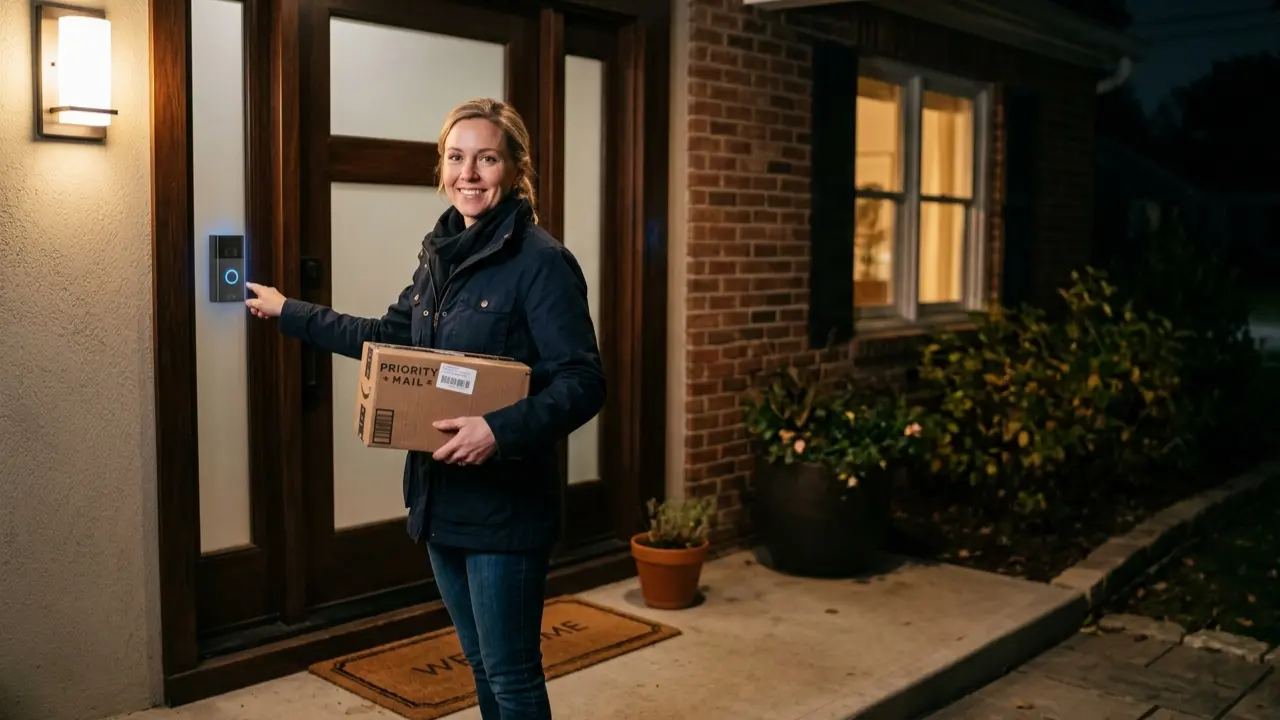
Person detection allows the device to focus on human activity instead of triggering alerts for every movement, such as trees, shadows, or passing cars. Package alerts help users know when a delivery arrives, which is useful for people who receive frequent shipments. Custom motion zones let users define exactly where the camera should pay attention, reducing unnecessary notifications.
Real-time notifications also improve the experience. Instead of checking recordings later, users receive alerts as events happen, which makes the system more practical for daily security.
These features reduce false alerts and make the device more useful in real situations. Without AI, even a high-resolution camera can become frustrating if it sends too many irrelevant notifications. With AI, the system becomes smarter, more selective, and easier to trust.
Ring 4K Battery Doorbells vs Wired Security Systems
For years, wired doorbells had a clear advantage because they offered continuous power and stable performance without interruptions. That made them the preferred choice for users who wanted reliability and higher video quality. However, that gap is getting smaller as technology improves. With Ring 4K battery doorbells, wireless devices now deliver performance that comes much closer to wired systems than before.
Wired systems still offer consistent power, which means they can record more frequently without worrying about battery limits. They also tend to provide stable performance in environments with constant activity. On the other hand, battery-powered doorbells now offer significant advantages that many users value more in daily life.
Battery systems provide easier installation, since users do not need to deal with wiring or professional setup. They also allow flexible placement, which is important for homes where wiring is not practical. More importantly, video quality has improved enough to compete in real-world scenarios, especially with the addition of 4K resolution.
This change shows that wireless devices are no longer a compromise. They are becoming serious alternatives for users who want both convenience and strong performance.
What This Means for the Smart Home Market
This upgrade reflects a broader trend in how smart home technology evolves. Devices are becoming more powerful, easier to install, and more dependent on intelligent software rather than just hardware improvements. With Ring 4K battery doorbells, the industry shows that premium features no longer belong only to high-end wired systems.
Smart home products now focus on balancing performance and accessibility. Users want strong features without complicated installation, and companies are responding by pushing advanced capabilities into wireless devices. This includes better video quality, smarter detection, and more efficient power use.
AI also plays a growing role. Devices do not just capture data; they interpret it, filter it, and deliver relevant alerts. That makes systems more useful in everyday life instead of overwhelming users with unnecessary information.
The result is simple. Technology becomes easier to adopt while still improving in performance. As more companies follow this direction, smart home devices will continue to move toward solutions that combine convenience, intelligence, and reliability in a single product.
This evolution is not limited to hardware. Platforms are also expanding their capabilities, as explored in our article on Apple Maps paid ads, where new features reshape how users interact with technology.
Who Should Care About Ring 4K Battery Doorbells
Homeowners
People who want better security without complex installation will see immediate value here. With Ring 4K battery doorbells, homeowners can upgrade surveillance without hiring professionals or dealing with wiring. That matters for renters, apartments, and older homes where installation options are limited. Clearer video also helps homeowners feel more confident about what happens at their door, whether it is a visitor, a delivery, or unexpected activity.
Smart Home Users
Users who are already building connected homes will benefit even more. These devices integrate easily with existing ecosystems, making it simpler to manage security alongside lighting, locks, and other smart features. Higher resolution combined with AI detection improves how these systems work together, creating a more responsive and useful setup.
Security-Conscious Users
Anyone who needs clearer identification and better monitoring should pay close attention. Higher detail can make a real difference when reviewing footage, especially in situations where accuracy matters. For these users, better video quality is not just a feature. It becomes a practical tool for making informed decisions about safety and awareness.
Important Questions Most People Don’t Ask
Before buying, users should look beyond marketing claims and think about real usage. With Ring 4K battery doorbells, practical details can shape the experience more than the headline features.
How often will the battery need recharging? Higher resolution and frequent motion alerts can increase power consumption. Do you need a subscription for cloud storage? Many advanced features, including video history, may depend on paid plans. Is your Wi-Fi strong enough for 4K streaming? A weak connection can reduce video quality or delay notifications. How much storage will recordings use? Larger video files can fill storage faster, especially with frequent activity.
These questions matter because they reflect daily use, not just technical specifications. A device can look impressive on paper, but real performance depends on setup, environment, and user habits. Taking time to understand these factors helps users avoid frustration and get the most value from their smart home security system.
The Future of Wireless Security
If battery efficiency continues to improve, high-resolution wireless devices could replace many wired systems in everyday homes. With Ring 4K battery doorbells, the smart home market is moving toward a future where users expect strong performance without complex installation.
The direction is clear. Devices will become more efficient, AI will get smarter, automation will improve, and smart home integration will become deeper. Doorbells will not only record video. They will understand movement, identify important events, reduce false alerts, and connect more smoothly with locks, lights, alarms, and mobile apps.
This matters because wireless security is no longer just the easier option. It is becoming a serious performance category. The best devices will combine clear video, long battery life, reliable alerts, and simple setup. That balance could make wireless security the standard for many households.
Final Analysis
This is not just a feature upgrade. With Ring 4K battery doorbells, we can see how far wireless security has come in a short time. A few years ago, 4K video on a battery-powered device would not have been practical. Now it is becoming part of normal expectations, which changes how users evaluate smart home devices.
In my view, the real shift is not only about resolution. It is about performance and convenience finally coming together in a way that makes sense for everyday use. Users no longer need to choose between easy installation and strong video quality. That balance is what will define the next generation of smart home security.
For official product details and specifications, users can check the Ring website, where the company explains how its latest smart doorbells are evolving.
Executive Summary
Ring 4K battery doorbells mark a clear shift in smart home security. Wireless devices now offer sharper video, smarter AI, and stronger performance. Trade-offs still exist, especially around battery life and data use, but the gap between battery-powered and wired systems is closing quickly.
