
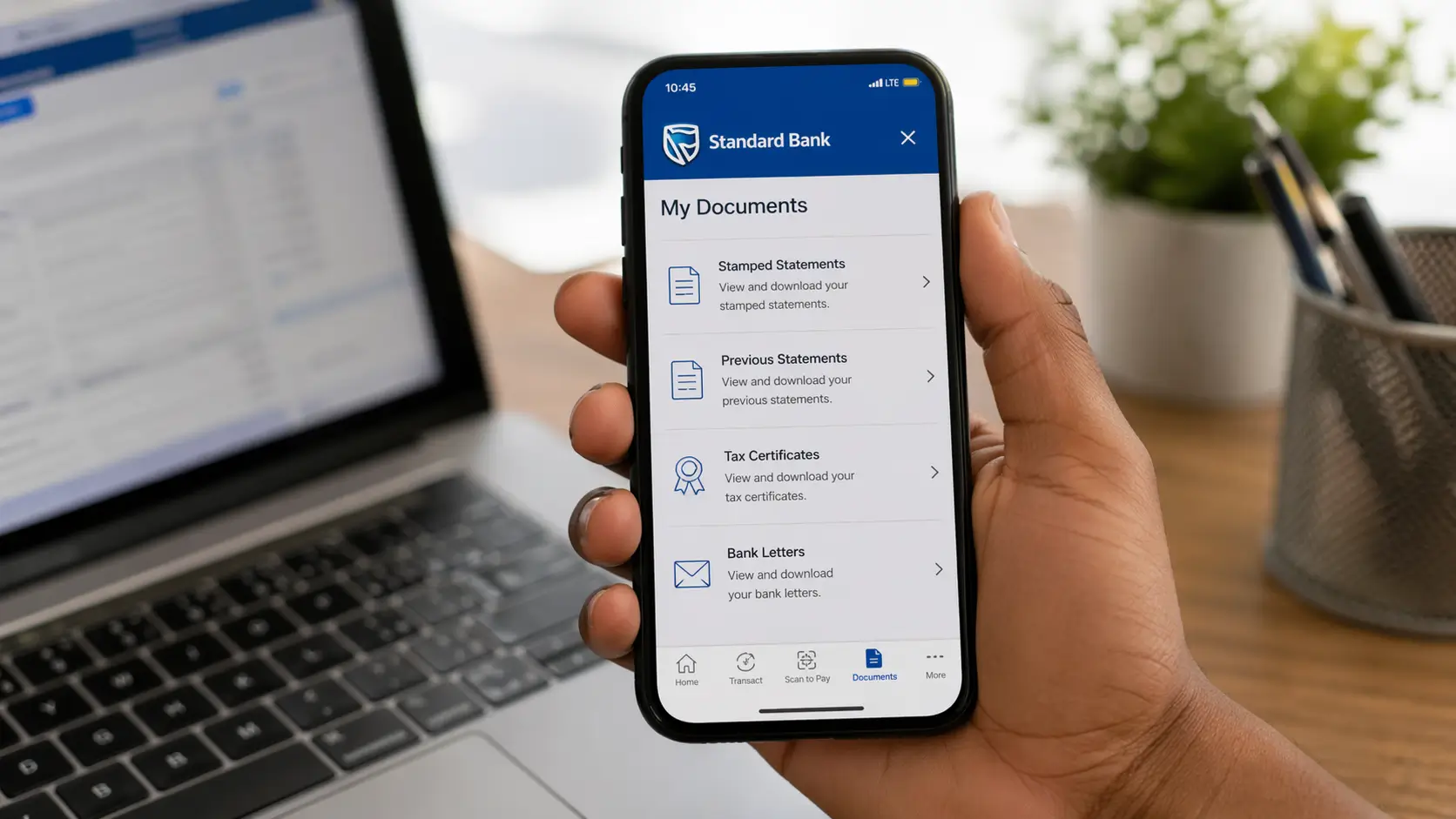

The Standard Bank app update brings a practical improvement that directly impacts how customers manage their financial documents. This new feature allows users to access essential banking records inside the app, making everyday tasks faster and more convenient. With the Standard Bank app update, customers no longer need to rely on branch visits for basic document requests, which saves both time and effort.
This change responds to a clear demand. People want simple access to their financial information without unnecessary steps. In the past, getting stamped statements or official bank letters often required physical visits or manual requests. Now, users can open the app, select the document they need, and download it instantly. That level of control makes a real difference in daily banking.
At the same time, the feature introduces an important limitation that customers should understand. Statements are available for 3 or 6 months only, which means long-term records still require additional planning. Users who need older documents must visit a branch or ensure they download and store their files regularly.
This update reflects a larger shift in digital banking. Customers expect speed, convenience, and reliability. Banks respond by moving more services into mobile platforms, where users already manage their finances. However, greater access also comes with responsibility. When financial documents become easier to download, users need to handle them carefully to avoid security risks.
Overall, the Standard Bank app update improves convenience while encouraging smarter document management. It simplifies access, but it also reminds users to stay organized and aware of how they store sensitive financial information.
What Documents Are Now Available in the App
The Standard Bank app update expands what customers can do inside the mobile platform by giving direct access to essential financial documents. This improvement makes it easier to manage everyday needs without depending on physical paperwork or branch visits. With this update, users can now retrieve important records in just a few steps.
With the Standard Bank app update, customers can now access several important documents directly from the app, which makes everyday banking much easier. The Standard Bank mobile app now includes access to stamped statements, previous statements, tax certificates, and bank letters, covering many of the documents people need most often.
This feature brings practical value to different situations.
Stamped statements can help when a customer needs official proof for financial or legal purposes. Previous statements make it easier to review account history and keep personal records organized. Tax certificates support annual financial planning and tax-related tasks, while bank letters may be useful for verification or formal administrative requests.
By making these documents available in one place, the Standard Bank app update reduces delays and gives users more control over their banking needs. Instead of depending on branch visits for basic records, customers can now handle many of these tasks quickly and more efficiently.
This list covers most of the documents people use regularly. Whether someone needs proof of income, prepares tax filings, or applies for credit, these records play a key role. The ability to download them instantly changes how customers interact with their bank.
Stamped statements stand out because many institutions require them for official verification. In the past, getting a stamped version often meant waiting in line or submitting a request. Now, the process becomes faster and more practical.
This new feature in the Standard Bank mobile app reflects a clear move toward convenience. It reduces delays, simplifies access, and gives users more control over their financial information. At the same time, it encourages customers to stay organized and download documents when needed.
Statement Availability in the Standard Bank App: What You Need to Know
The Standard Bank app update improves access to documents, but it also introduces a limit that customers need to understand clearly. While the feature makes it easier to retrieve recent records, it does not provide unlimited history inside the app.
Statements are available for 3 or 6 months only
This means users can quickly access their most recent financial activity, which covers most everyday needs. However, the app does not store older statements beyond that timeframe. If a customer requires documents from earlier periods, they will still need to visit a branch or request them through official channels.
This limitation highlights the importance of planning ahead. Customers who depend on long-term financial records—for example, for loans, audits, or tax purposes—should download and store their statements regularly. Keeping personal copies ensures that important information remains accessible when needed.
The Standard Bank mobile app makes access faster, but it does not replace long-term record management. Users who rely only on in-app availability may face challenges when older documents become necessary. Understanding this balance helps customers use the feature effectively while avoiding future inconvenience.
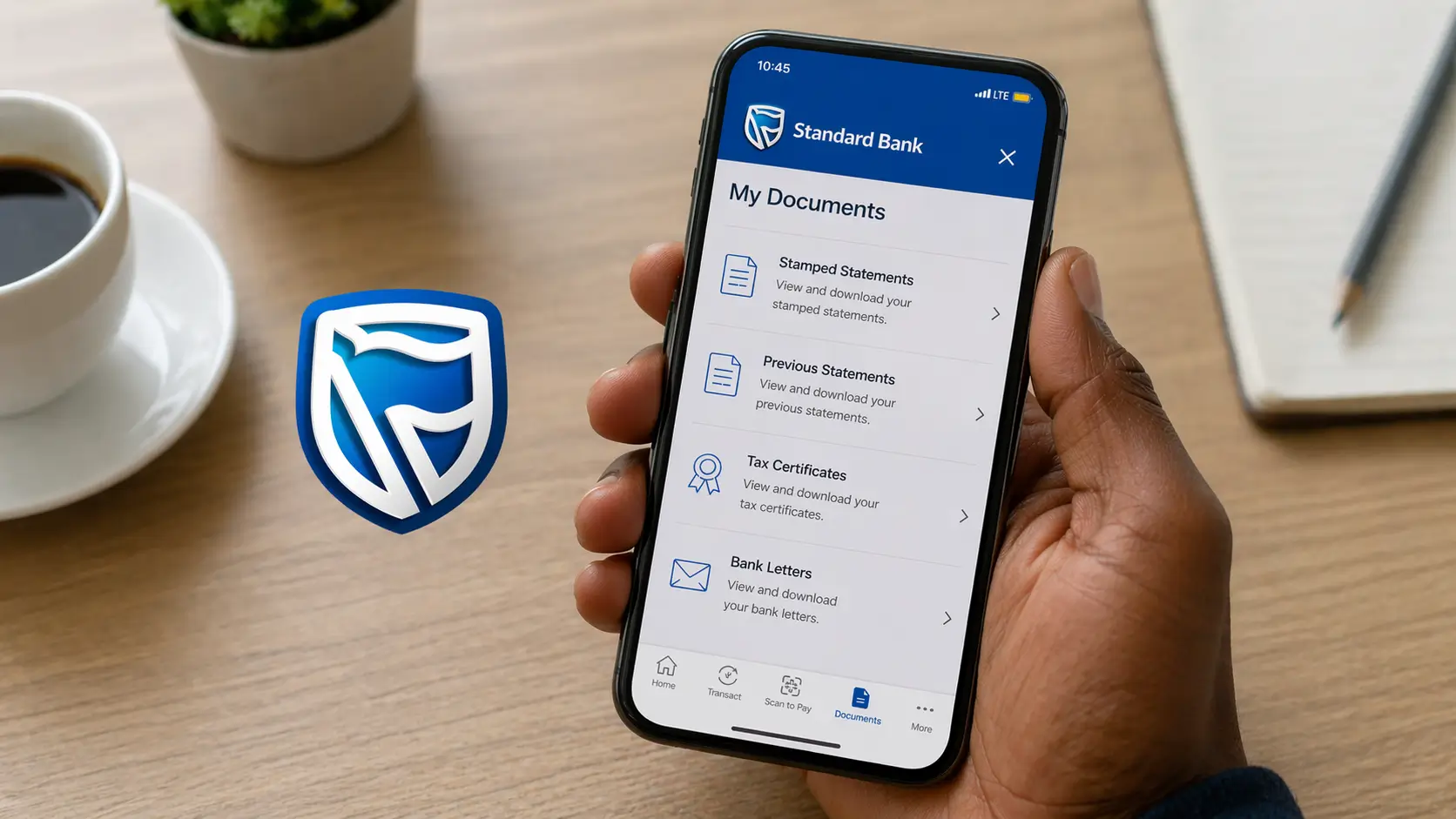
How This Feature Improves the Banking Experience
The Standard Bank app update improves the overall banking experience by removing delays and simplifying everyday tasks. This change gives customers faster access to their documents and reduces the need to visit physical branches for routine requests. The Standard Bank mobile app now supports a more direct and efficient way to manage important financial records.
Instead of waiting in line or submitting manual requests, users can:
The Standard Bank app update transforms how customers handle everyday document needs by making access faster and more practical. With the Standard Bank mobile app, users can retrieve records instantly without waiting or going through lengthy processes. This immediate access helps customers stay in control of their financial information at all times.
Users can download documents whenever they need them, which removes delays that were common with manual requests. Whether for personal use or urgent situations, having documents ready on demand makes a real difference. In addition, customers can use these files immediately for official purposes, such as applications, verification, or administrative tasks.
This level of convenience changes the overall banking experience.
Instead of planning ahead or relying on branch visits, users can act quickly and confidently. The Standard Bank app update simplifies routine actions and supports a more efficient and responsive way of managing financial documents.
This level of convenience changes how customers interact with their bank. Tasks that once required time and effort can now be completed in minutes. That makes a real difference for people who need documents quickly for applications, verification, or personal records.
This improvement also reflects a broader shift in digital banking. Customers expect services to be fast, accessible, and easy to use. Banks respond by integrating more features into mobile platforms, where users already manage their finances daily.
The Standard Bank app update shows how financial institutions are adapting to these expectations. By making essential services easier to access, the app supports a smoother, more practical banking experience while keeping users in control of their information.
Security Considerations Users Should Understand
The Standard Bank app update makes accessing documents easier, but it also increases the need for strong personal data protection. Convenience can create new risks if users do not handle their information carefully. Documents such as bank statements, tax certificates, and official letters contain sensitive financial details that require proper attention.
When users download these files through the Standard Bank mobile app, they take responsibility for how those documents are stored and shared. Leaving files unprotected on a device or sending them through unsecured channels can expose important information to unauthorized access.
To reduce risk, customers should follow simple but effective practices:
- Avoid sharing downloaded documents unless it is absolutely necessary
- Store files in secure folders or encrypted storage
- Use device security features such as passwords, PINs, or biometric locks
- Be cautious when accessing or downloading documents on public Wi-Fi networks
These actions help protect personal data in everyday situations. Many security issues do not come from the bank itself but from how users manage their information after downloading it.
The Standard Bank app update highlights a key reality of digital banking. As access becomes faster and more flexible, responsibility also increases. Users gain more control over their financial data, but they must also protect it actively.
Understanding this balance is essential. Digital tools can improve convenience and efficiency, but they only remain safe when users combine them with good security habits.
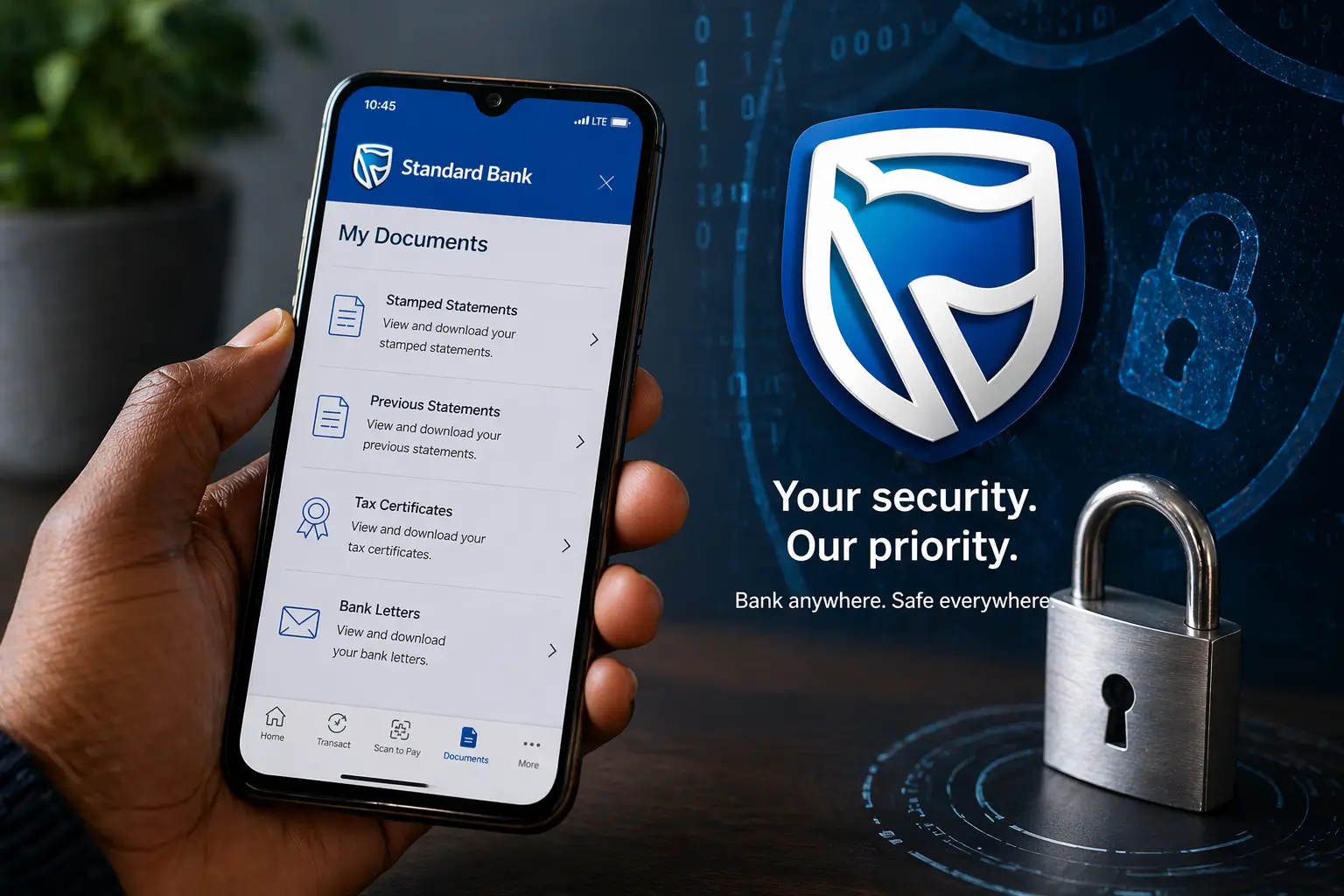
As the Standard Bank app update introduces new ways to access financial documents, it becomes equally important for users to stay aware of potential security risks. Following updates and alerts, such as those highlighted in Standard Bank Alerts Customers, helps customers better understand how to use digital banking features safely and responsibly.
When You Still Need to Visit a Branch After the Standard Bank App Update
The Standard Bank app update improves convenience, but it does not replace every banking service. While the Standard Bank mobile app now allows quick access to many documents, some situations still require a visit to a physical branch.
Customers will still need to visit a branch in specific situations, even with the improvements introduced by the Standard Bank app update. While the Standard Bank mobile app covers most everyday document needs, it does not replace all services.
Users must go to a branch when they require statements older than 6 months, since the app only provides access to recent records. Customers also need in-person assistance when they request specialized or officially certified documents that the app does not currently support. In addition, technical issues can sometimes prevent access to records, and in those cases, a branch visit becomes necessary.
These situations highlight an important point.
The app improves convenience, but it does not eliminate the role of physical banking completely. Customers benefit from faster digital access, but they still rely on branches for more complex needs and long-term documentation.
These cases highlight the limits of the current feature. The app focuses on everyday needs, especially recent documents, but it does not cover long-term records or more complex requests.
This does not reduce the value of the update. Instead, it shows how digital banking continues to evolve step by step. The app handles routine tasks efficiently, while branches remain important for more detailed services.
The Standard Bank app update reduces the need for in-person visits, but it does not eliminate them completely. Customers benefit from faster access to common documents, yet they still rely on branches when they need deeper support or older records. Understanding this balance helps users take full advantage of the feature without expecting it to solve every situation.
What the Standard Bank App Update Means for the Future of Digital Banking
The Standard Bank app update does more than introduce a new feature. It reflects a broader transformation that is reshaping how people interact with financial services. The Standard Bank mobile app now moves closer to a fully digital experience, where customers can manage most of their needs without leaving their phones.
Banks across the industry are moving in the same direction. They focus on building platforms that support full digital self-service, giving users direct control over their accounts, documents, and transactions. Faster access to personal financial data has become a standard expectation, not a premium feature. Customers want immediate results, and mobile apps now deliver that speed.
This shift also reduces reliance on physical branches. While branches still play an important role, especially for complex services, everyday tasks continue to move into digital spaces. Users now prefer to handle simple requests quickly, without waiting or traveling. That change improves convenience and saves time.
At the same time, mobile experiences are becoming more integrated. Banking apps no longer serve only as tools for checking balances or transferring money. They now function as complete platforms where users manage documents, verify information, and interact with financial services in one place.
This direction benefits both customers and institutions. Users gain flexibility and faster access, while banks reduce operational pressure on branches and improve efficiency.
The Standard Bank app update shows where digital banking is heading. As technology continues to evolve, more services will move into mobile platforms, making banking increasingly digital-first, faster, and more accessible for everyday users.
The Standard Bank app update improves access to financial documents, but users should also rely on official guidance to understand how to manage their information safely. Following recommendations available on the Standard Bank security centre and scams awareness page helps customers stay informed and avoid common risks when using digital banking features.
