
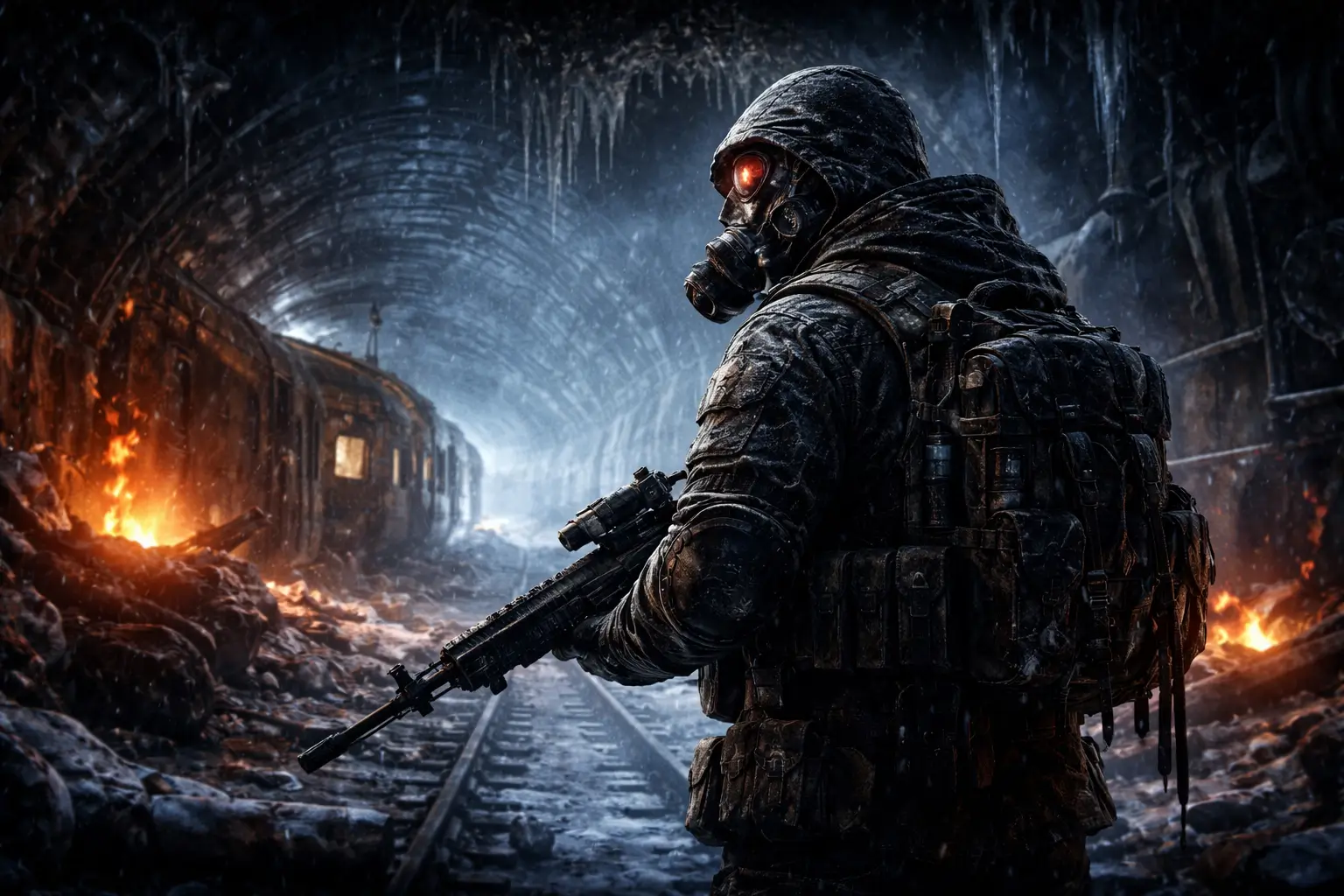

Metro 2039 first look reveals darker gameplay and visuals, and this early impression already tells a powerful story about the direction of the franchise.
From what we have seen so far, the developers do not treat the game as a simple continuation. Instead, they shape it into a more intense and emotionally demanding experience, where every element amplifies tension and immersion.
The Metro series has always relied on atmosphere as its strongest asset.
The game places players in environments where danger is not always visible, but constantly present. In this new installment, the developers push that feeling even further. Darkness is no longer just a visual choice—they use it as a core gameplay tool. Deeper shadows limit visibility, while growing uncertainty increases tension. As a result, players must move more carefully and think more strategically in every situation.
At the same time, environmental storytelling seems to be receiving more attention.
Instead of relying heavily on dialogue or exposition, the developers use the world itself to communicate meaning. They design abandoned locations, subtle details, and background elements to suggest what happened, rather than explain it directly.
This approach allows players to interpret events in their own way, which can make the experience feel more personal and immersive.
Another important aspect is pacing. In earlier Metro titles, moments of action were often balanced with slower exploration. In Metro 2039, that balance appears to be refined. Quiet moments feel longer and more tense, while action sequences feel more unpredictable. Because of this, the emotional impact of each encounter is increased. Players are not only reacting to threats—they are anticipating them, which creates a constant sense of pressure.
The Ukrainian development team behind the project is clearly focusing on detail and realism. Lighting is being handled with greater precision, making environments feel more dynamic and believable. Sound design also plays a critical role. Small noises, distant echoes, and environmental sounds are used to build tension, often signaling danger before it becomes visible. These elements work together to create a world that feels alive, even when it is empty.
Moreover, character interaction appears to be more grounded. Instead of exaggerated reactions, more subtle and realistic behavior is being emphasized. This helps strengthen the connection between the player and the world, making every decision feel more meaningful.
In the end, Metro 2039 goes beyond a darker look—it creates a heavier experience in every sense. The developers bring together emotional tone, gameplay structure, and environmental design to deliver a more immersive and demanding experience.
Metro 2039 Gameplay: What Has Changed
Metro 2039 first look highlights meaningful gameplay improvements while the developers preserve the core identity of the series. Instead of introducing completely new systems, they refine the experience to make every action feel more deliberate, more responsive, and more connected to the environment.
This approach ensures that the game evolves without losing what made it unique in the first place.
Movement has been carefully adjusted to feel smoother and more natural. Transitions between actions appear more fluid, and player control feels tighter. As a result, exploration becomes more engaging, especially in darker and more confined spaces where precision matters. Environmental interaction is also being expanded. Objects, surfaces, and pathways are being designed to respond more realistically, which adds depth to both navigation and survival.
Stealth remains a central pillar of the experience, and it is being emphasized even further.
Players are encouraged to observe, plan, and move cautiously. Direct combat is still an option, but it is no longer the safest or most efficient choice in many situations. Instead, tension is built through avoidance, timing, and awareness. This design reinforces the survival-focused nature of the series, where every bullet and every decision carries weight.
Enemy behavior is another area where noticeable progress is being made. Artificial intelligence appears more adaptive and less predictable. Enemies react more quickly to sound, light, and movement, making encounters feel more dynamic. Because of this, patterns are harder to exploit, and players must remain alert at all times. Situations can change rapidly, and strategies that worked moments before may no longer be effective.
In addition, the developers refine the pacing of gameplay. They balance quiet exploration and high-intensity encounters more carefully. They extend slower moments to build tension, while making combat sequences more unpredictable.
This creates a rhythm where players are constantly shifting between caution and action.
Overall, the changes in Metro 2039 are not about transforming the gameplay entirely. Instead, they are about improving every detail so that the experience feels deeper, more immersive, and more demanding from start to finish.
Darker Visuals and Atmosphere Explained
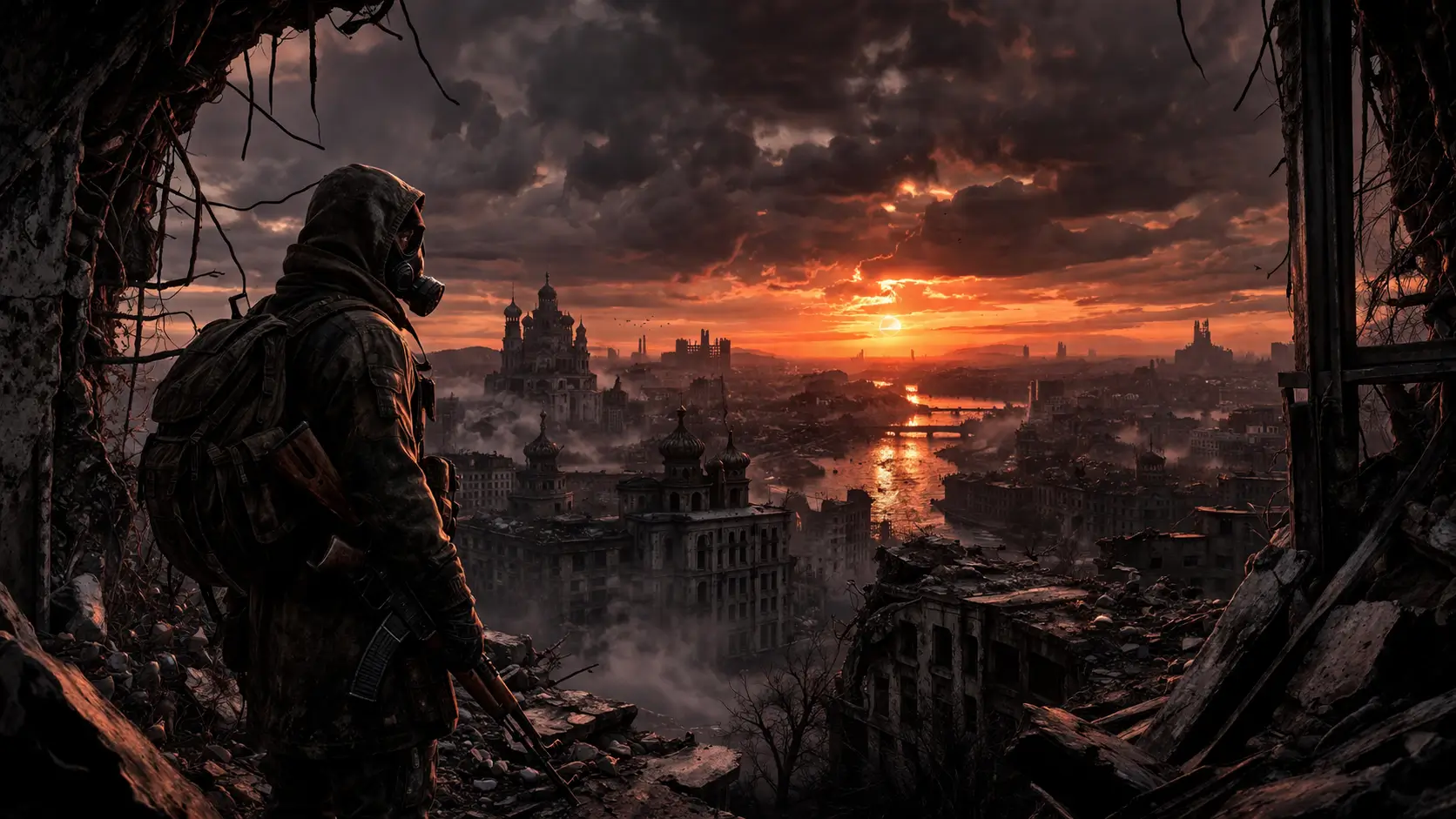
One of the most striking elements in the Metro 2039 first look is the visual direction. The game clearly leans into darker tones, both literally and stylistically.
The team adjusts lighting to create deeper shadows, making environments feel more claustrophobic and detailed.
This shift is not only aesthetic. It directly affects gameplay. Limited visibility forces players to rely more on sound cues and environmental awareness. Consequently, every movement becomes more deliberate, and every decision carries more weight.
Furthermore, the use of advanced rendering techniques enhances realism. Surfaces appear more textured, reflections more subtle, and environmental effects more convincing. Together, these elements contribute to a more immersive and believable world.
The Role of the Ukrainian Developer Behind Metro 2039
Metro 2039 continues to reflect its Ukrainian roots, and this influence shapes the entire experience. The developers guide the game’s tone, storytelling, and visual direction with a grounded and authentic perspective.
Rather than following trends, the developers appear focused on maintaining the identity that has defined the series for years.
At the same time, the team continues to push the technical side of the project forward. They improve lighting, environmental detail, and sound design with careful attention. These changes go beyond visual impact. Instead, the developers use them to strengthen immersion and make the world feel more believable.
Every detail seems to serve a purpose, which reflects a disciplined and thoughtful development process.
The Ukrainian development team has built a strong reputation for creating personal and emotionally charged experiences. In Metro 2039, they push that approach even further. While they have not fully revealed the narrative, the atmosphere already suggests a deeper emotional layer.
The developers emphasize themes of isolation, survival, and uncertainty more strongly, which adds weight to the overall experience. These elements shape how players connect with the world and its challenges.
At the same time, recent global events may influence the creative direction, even if the team has not confirmed this directly. Real-world situations often shape artistic expression, and Metro 2039 may reflect that reality in subtle but meaningful ways.
The darker tone and heightened intensity could reflect a more serious and introspective perspective.
In the end, the role of the Ukrainian developer is not just about building the game. It is about shaping its identity, ensuring that Metro 2039 remains true to its roots while continuing to evolve in meaningful ways.
At the same time, the gaming industry continues to evolve alongside broader technology trends, similar to how companies are adapting to financial and operational changes in the tech sector.
What Metro 2039 First Look Means for Players
Metro 2039 first look suggests that players should expect a more demanding and immersive experience than before.
The developers do not design the game for fast-paced, casual play. Instead, they focus on atmosphere, tension, and realism, making every moment feel meaningful.
Long-time fans will likely see this direction as a strong positive. The developers preserve the core identity of Metro while refining its systems to deliver a deeper experience. They improve familiar mechanics instead of replacing them, which helps maintain continuity while still allowing the game to evolve.
As a result, returning players can expect something that feels both recognizable and more intense.
At the same time, new players may find the experience more challenging. The pacing is slower, and the environment requires careful attention.
The game rarely rewards players who rush through situations. Instead, it encourages observation, patience, and planning. This design approach may take time to adapt to, especially for players who prefer more action-driven games.
Another important aspect is emotional engagement.
The developers build the atmosphere in a way that keeps players constantly aware of potential danger. They use silence, darkness, and subtle environmental cues to create tension, even when no immediate threat appears.
Because of this, players are not only reacting to events—they are anticipating them.
In addition, decision-making carries more weight. Resources are limited, and every action can have consequences. This reinforces the survival aspect of the game and makes each encounter feel more significant.
Overall, Metro 2039 is being shaped as an experience that rewards focus and immersion. It is not just about completing objectives, but about feeling the world and responding to it carefully.
Metro 2039 First Look Points to Release Expectations and What Comes Next
Although developers have not confirmed an official release date, expectations around the launch continue to grow as the Metro 2039 first look signals steady progress behind the scenes. Early material shows that the team is advancing development in a controlled and deliberate way, rather than rushing the process. This approach reflects a clear focus on quality and long-term impact.
Looking at previous Metro releases, the team will likely share more information gradually. They usually release trailers, gameplay demonstrations, and developer insights in stages. As a result, anticipation grows naturally over time, and the audience gains a clearer understanding of the project’s direction before the final release.
This strategy not only maintains interest but also gives the development team space to refine the experience based on feedback.
At the same time, industry trends suggest that modern game development requires longer timelines.
Players now demand high levels of detail, advanced graphics, and complex systems. As a result, developers take more time to make sure everything functions properly.
In the case of Metro 2039, this careful pace may indicate that the team is focusing on delivering a polished and complete experience.
Another important factor is platform optimization.
As hardware continues to evolve, developers must ensure that their games perform consistently across different systems.
This process involves extensive testing and adjustment. Therefore, even if the core game is close to completion, final optimization may still take time.
Looking ahead, the Metro 2039 first look serves as a foundation for what could become a defining entry in the franchise. The early focus on atmosphere, realism, and emotional depth suggests that the game aims to go beyond technical improvements. It is being positioned as an experience that leaves a lasting impression on players.
If the developers fully deliver on these early impressions, Metro 2039 could set a new benchmark for immersive storytelling in modern gaming.
The combination of refined gameplay, deeper atmosphere, and strong narrative direction could elevate the series to a new level.
For now, attention remains on upcoming updates. Each new reveal will likely provide more clarity about the game’s scope, features, and final release window. Until then, expectations will continue to build, driven by the strong foundation already presented.
The Metro series has consistently focused on immersive storytelling, as seen in previous titles developed by the original studio.
Executive Summary
The Metro 2039 first look reveals darker gameplay and visuals, reinforcing the idea that the series is moving toward a more intense and immersive direction.
From what we have seen so far, the developers focus not only on visual improvements but also on the overall player experience.
They emphasize atmosphere, tension, and realism more strongly, creating a world that feels heavier and more engaging.
At the same time, the team refines core mechanics instead of replacing them. They improve movement, stealth, and interaction systems to deliver smoother and more responsive gameplay.
These adjustments are subtle, yet they play an important role in shaping a more consistent and immersive experience.
In addition, the emotional tone appears to be deeper.
The developers design the world to feel more oppressive and unpredictable, increasing the sense of danger and isolation.
This approach aligns with what long-time fans expect, while also offering something more demanding for new players.
Overall, Metro 2039 represents a natural evolution of the franchise.
If the final version reflects these early impressions, it could set a new standard for atmospheric storytelling while remaining true to its identity.
